Poly Fuel Tank vs. Aluminum Transfer Tank: Which Is Right for Your Work Truck?
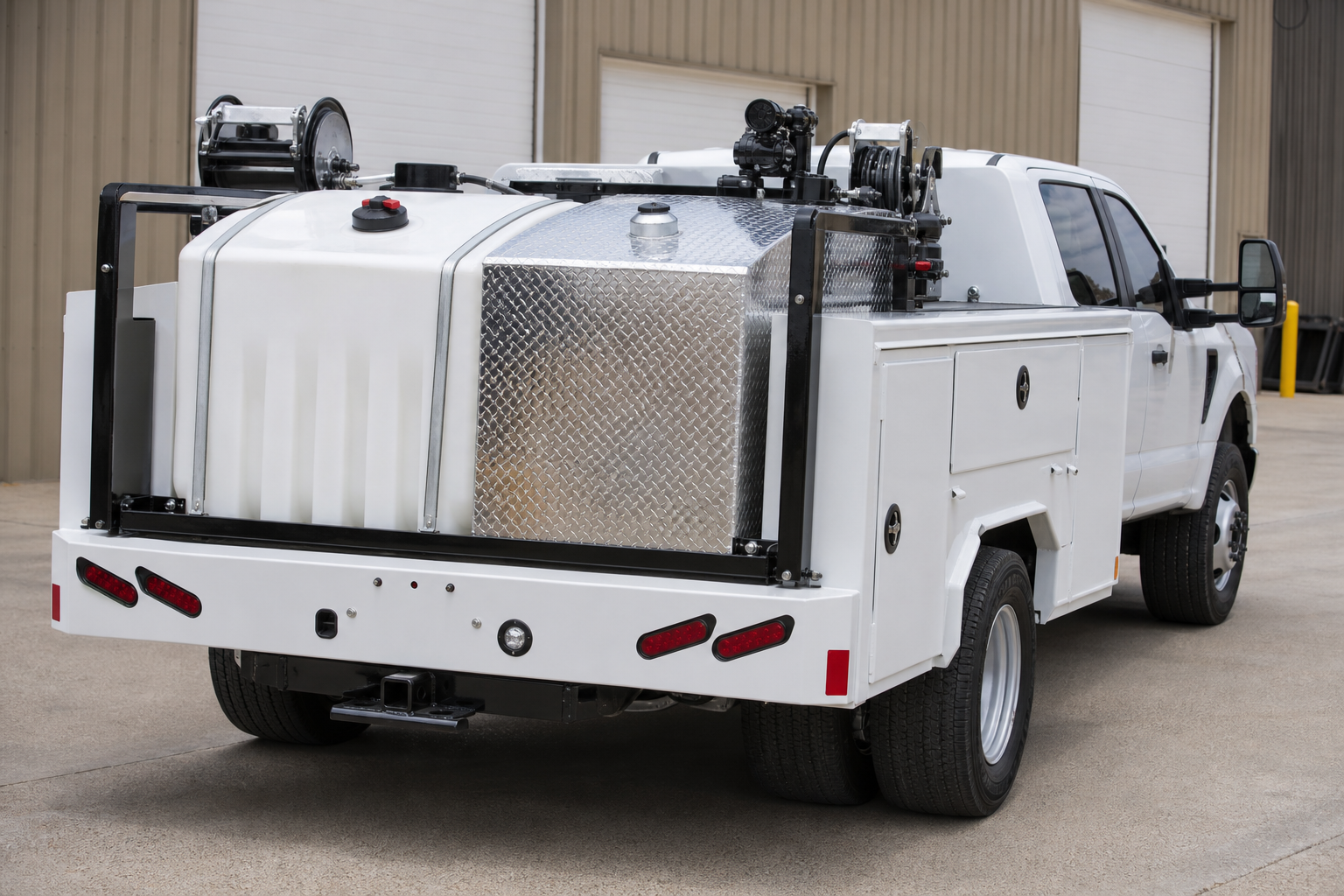
If you’re building out a lube truck, fuel service body, or mechanics truck, one of the biggest decisions is what the fuel or fluid transfer tank itself is made from. The two most common options are polyethylene (poly) tanks and aluminum tanks. Both show up on STI (Service Trucks International) service bodies and other fuel/lube setups we build in Wharton, but they have real differences in weight, durability, fuel compatibility, and cost that matter once the truck is out working in Texas heat or Louisiana humidity.
Poly Fuel Tanks: Lightweight and Corrosion-Proof
Polyethylene tanks are molded from UV-stabilized plastic, which means they never rust, never corrode, and won’t react with diesel, DEF, or most common fluids. That corrosion resistance is a big deal on the Gulf Coast, where humidity and road salt eat through metal tanks over time. Poly tanks are also noticeably lighter than aluminum, which helps preserve payload capacity on a fully loaded lube truck or fuel service rig — every pound saved on the tank is a pound you can carry in tools, parts, or extra fluid. The tradeoff is that poly tanks are more vulnerable to punctures from sharp debris or impact damage, and they’re not typically rated for gasoline storage in the same way some aluminum tanks are, so it’s worth confirming fluid compatibility for your specific application.
Aluminum Transfer Tanks: Built for Abuse
Aluminum tanks are the traditional choice for fuel and fluid transfer on work trucks, and for good reason — welded aluminum construction holds up to years of daily abuse, resists denting better than poly under impact, and is compatible with a wider range of fuels including gasoline and diesel. Aluminum also naturally resists corrosion (though not quite as completely as poly), and if a tank does get damaged, a good weld shop can often repair it rather than replace the whole unit. The downside is weight — aluminum tanks add more pounds to your already-loaded service body than poly, which matters most on trucks running close to their GVWR with tools, compressors, and welders on board.
Which Tank Fits Your Fleet?
- Payload-sensitive builds: Poly’s lighter weight helps on trucks already loaded down with tools, compressors, or welders.
- Gasoline transfer: Aluminum is generally the safer, more widely accepted choice for gasoline storage and transfer — confirm ratings before speccing poly for this use.
- Coastal, high-humidity routes: Poly’s total corrosion immunity is a long-term advantage for Louisiana and Gulf Coast fleets running lube and fuel trucks daily.
- Rough terrain or high-impact work: Aluminum’s dent resistance and repairability hold up better on oilfield, ag, and construction routes where a tank might take a hit.
- Budget and repair costs: Poly tanks are typically less expensive up front, while aluminum tanks can often be welded and repaired rather than replaced.
Specced Right for How You Work
Star Truck Equipment builds STI lube trucks and fuel service bodies with tank options matched to what you’re hauling and where you’re working — poly for lightweight, corrosion-proof fuel and DEF transfer, or aluminum for gasoline compatibility and heavy-duty durability. We’ll walk you through tank capacity, compartment layout, and pump/reel options to match your route and fluid needs.
Talk to Star Truck Equipment
Not sure whether a poly or aluminum transfer tank is the right call for your lube or fuel service truck? Our team in Wharton, TX helps fleets and independent operators across Texas and Louisiana spec the right tank, pump, and body configuration for their trucks.
Call Star Truck Equipment at (979) 532-1486 or visit us at 2507 County Rd 231, Wharton, TX 77488 to talk through fuel and fluid transfer tank options for your fleet.