Almost every service truck and flatbed that tows trailers for a living needs a rear hitch, and the two most
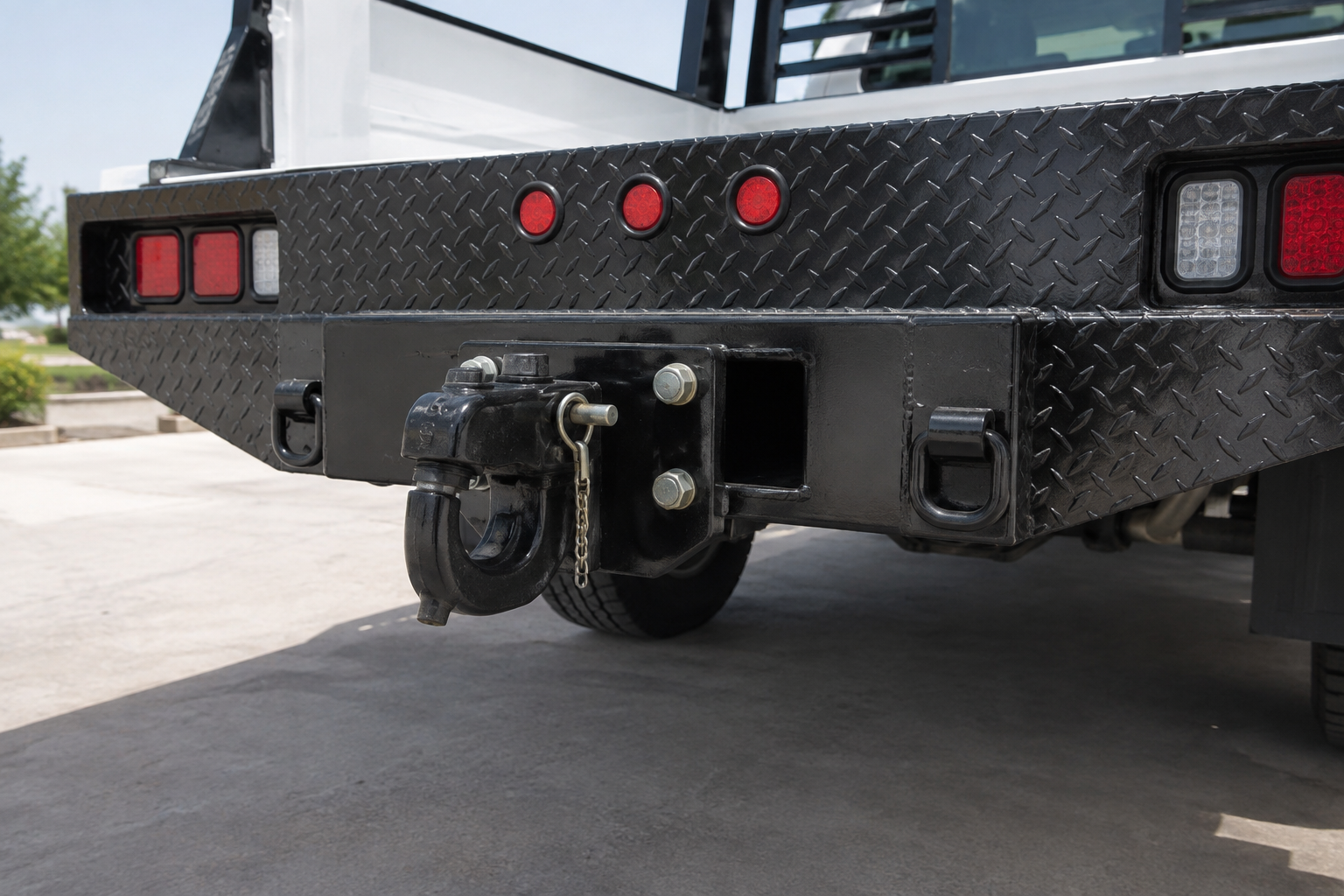
common setups are a pintle hitch (a hook-and-loop coupling built for heavy, repeated towing) or a standard ball
hitch (a ball-and-socket coupling most trailers come set up for out of the box). At
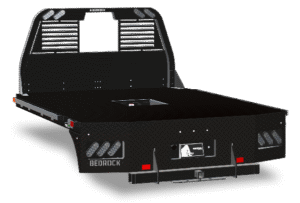
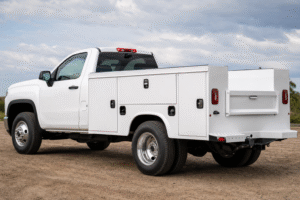
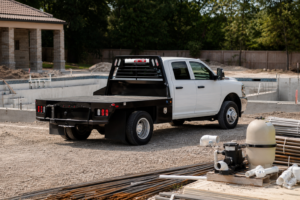
Star Truck Equipment in Wharton, TX, we mount both styles on
flatbed truck bodies and
service bodies, and the right pick comes
down to what you’re towing and how often across Texas and Louisiana job sites.
What a Pintle Hitch Offers
A pintle hitch uses a hardened steel hook and a lunette ring on the trailer tongue, and it’s built to handle
much higher towing loads with far less wear than a ball-and-coupler setup. The loose-fit connection also flexes
better over rough ground, which matters on unpaved yards, oilfield pads, and construction sites where a rigid
ball coupler can bind or bounce. Pintle hitches are the standard on heavy equipment trailers, gooseneck-style
utility trailers converted to pintle rings, and municipal or utility fleet trailers rated well above what a
ball setup should be trusted with.
What a Ball Hitch Offers
A ball hitch is the setup most trailers already come with — landscape trailers, small equipment trailers,
and most rental trailers use a standard 2″ or 2-5/16″ ball coupler. It’s quieter on pavement, easier to hook up
solo since the coupler locks down over the ball, and it doesn’t require swapping trailers to a different tongue
style. For lighter-duty towing and mixed-fleet operations where trucks hook up to a variety of rental or
customer-owned trailers, a ball hitch keeps you compatible with what’s already out there.
Which Setup Fits Your Work?
- Heavy equipment and utility trailers over 10,000 lbs — a pintle hitch is built for the load and the abuse
- Oilfield, construction, and off-road towing — the pintle’s loose coupling handles rough terrain without binding
- Mixed fleets hooking up to rental or customer trailers — a ball hitch keeps you compatible with standard couplers
- Landscaping and lighter-duty towing on paved routes — a ball hitch is quieter and easier for a solo hookup
- Fleets that tow both — a combination pintle/ball receiver lets one truck handle either trailer type
Either setup can be specified when your truck body is built, and a combination receiver is often the most
flexible choice for fleets that don’t want to commit to one style. Browse our
truck accessories, or ask about outfitting your
next flatbed or
service body order with the right hitch
for your trailers.
Get Your Truck Set Up Right
Star Truck Equipment builds and outfits truck bodies for fleets and owner-operators across Texas and Louisiana
from our shop in Wharton, TX. Call us at (979) 532-1486 or browse our
flatbed truck bodies and
truck accessories to get started.