If you’re upfitting a work truck, one of the first decisions you’ll face is whether to go with an enclosed utility body or an open utility body (also called a service body or flatbed-style utility body). Both configurations serve contractors, tradesmen, and fleet managers well — but they’re built for different priorities. At Star Truck Equipment in Wharton, TX, we outfit trucks for customers across Texas and Louisiana every week, and this is one of the most common questions we get. Here’s how to decide.
What Is an Enclosed Utility Body?
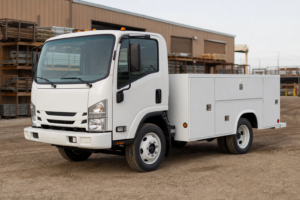
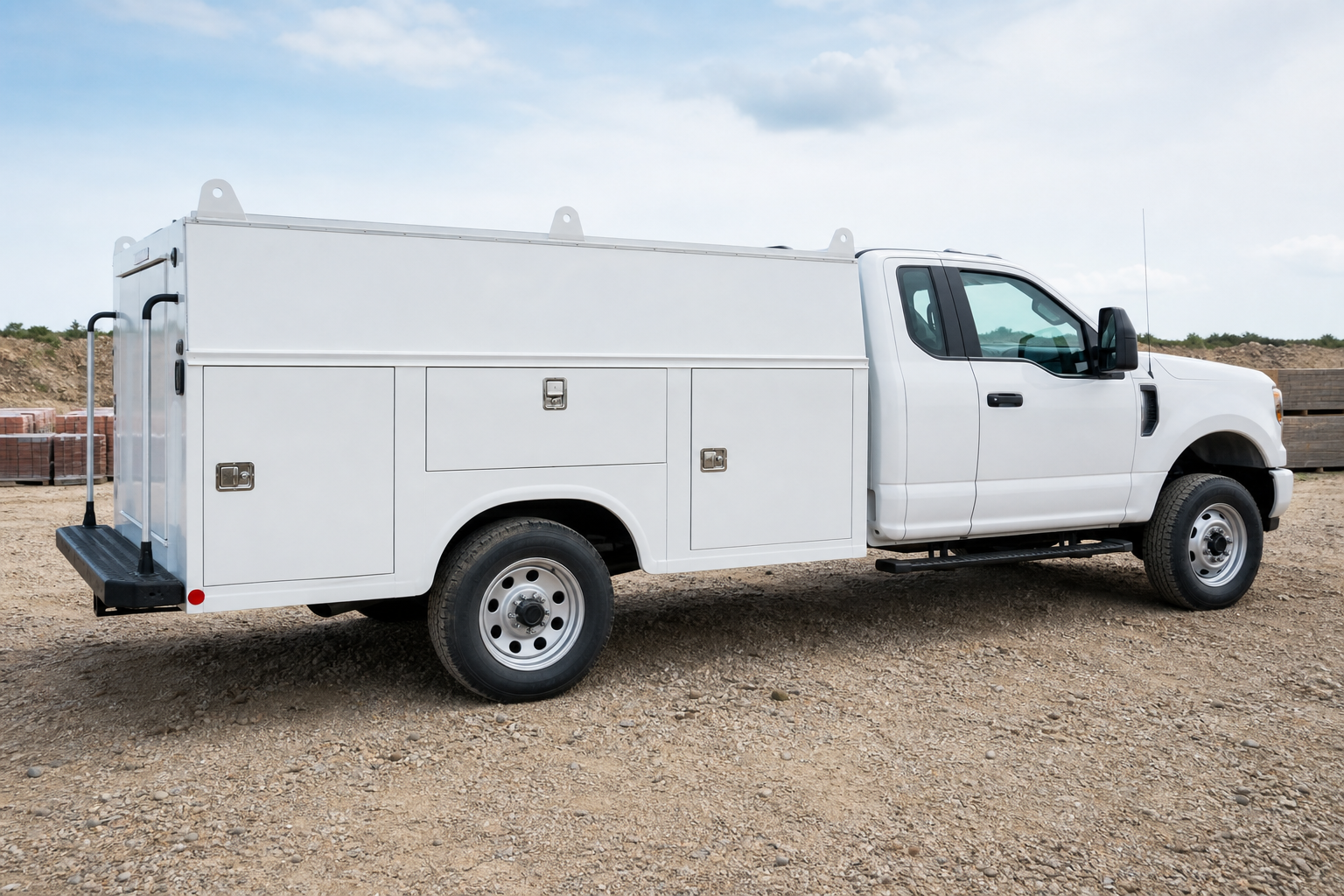
An enclosed utility body — like a SpaceKap service cap — fully encloses your cargo area with hard walls, a locking rear door, and often side access doors. Tools, equipment, and inventory are protected from weather, dust, and theft. Enclosed bodies are popular with technicians who carry expensive tools (HVAC, electrical, plumbing) or valuable parts inventory that needs to stay dry and secured overnight at job sites or parking lots.
What Is an Open Utility Body?
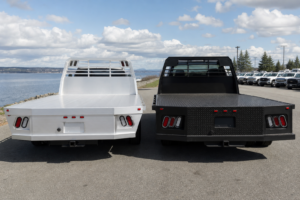
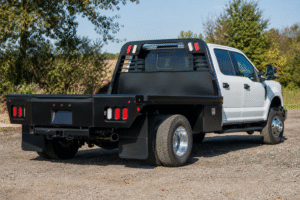
An open utility body — think CM or Norstar service bodies and flatbeds — uses a combination of open compartments, lockable side boxes, and an open flat deck or headache-rack area. This design gives you maximum flexibility for hauling odd-sized loads, pipe, lumber, or equipment that won’t fit inside an enclosed box. Tools still lock in the side compartments, but larger cargo rides exposed on the deck.
Security & Weather Protection
Enclosed bodies win this category outright. If your fleet parks unattended overnight, or your crew carries diagnostic equipment, laptops, or specialty tools that can’t get wet, an enclosed body is worth the investment. Open bodies rely on lockable underbody boxes for secure items, but anything on the open deck is exposed to rain and theft risk unless tied down and covered.
Payload & Load Flexibility
Open utility bodies generally offer more usable payload flexibility. You can haul pipe, ladders, lumber, fencing material, or oversized equipment that simply won’t fit through an enclosed door. For ranchers, oilfield crews, and construction contractors who need to move irregular loads, an open flatbed-style utility body is almost always the better fit. Enclosed bodies trade some of that flexibility for protection and organization.
Weight Considerations
Enclosed bodies add more structural weight than an open service body of similar length, which can eat into your payload capacity — something to watch closely on 3/4-ton and smaller trucks. If you’re running a Ford F-250, Ram 2500, or Chevy 2500HD, talk to our team about GVWR before committing to a full enclosed setup. On 1-ton and larger cab chassis trucks, the added weight is rarely an issue.
Cost Comparison
Enclosed utility bodies typically cost more upfront due to the additional fabrication, weatherproofing, and locking mechanisms involved. Open service bodies and flatbeds tend to be more budget-friendly and offer a lower cost per foot of usable cargo space. If budget is tight, an open body with secure underbody toolboxes often delivers 80% of the security benefit at a lower price point.
Which Trades Choose Which?
- Enclosed bodies: HVAC technicians, electricians, IT/security installers, plumbers carrying fixtures, mobile mechanics with sensitive diagnostic equipment
- Open bodies: Ranchers, oilfield and pipeline crews, fencing contractors, general construction, landscapers, utility line crews
Talk to Star Truck Equipment
There’s no universal right answer — it comes down to what you haul, how you park your fleet, and your budget. Our team at Star Truck Equipment has fitted trucks across Texas and Louisiana with everything from service bodies and flatbeds to fully enclosed setups, and we’ll walk you through the tradeoffs for your specific trade. Give us a call at (979) 532-1486 or stop by our Wharton, TX location to see enclosed and open utility bodies side by side.