Bumper Pull vs Gooseneck Hitch: Which Towing Rating Do You Actually Need?
One of the most common questions we get from Texas and Louisiana truck owners at Star Truck Equipment is whether to set up a rig with a bumper pull hitch or a gooseneck hitch. The right answer depends on how much weight you’re actually towing, how often, and what kind of trailer or flatbed you’re running behind it. Here’s how the two stack up on towing capacity, stability, and cost so you can make the right call for your work truck.
Bumper Pull Hitches: Lower Ratings, Lower Cost, Easier Setup
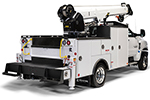
A bumper pull (or “tag-along”) hitch mounts to the rear frame of the truck below the bumper and connects to a ball on the trailer tongue. Most Class III–V receiver hitches used for bumper pull towing top out in the 8,000–17,000 lb gross trailer weight range, depending on the receiver class and truck rating. Bumper pull setups are cheaper to install, easier to hook up solo, and don’t require any modification to your truck bed or flatbed — a real advantage if you’re already running a service body or utility bed and don’t want to cut into it for a gooseneck ball. The tradeoff is less stability at higher weights, since all the pulling force acts on a single point behind the rear axle.
Gooseneck Hitches: Higher Capacity, Better Stability
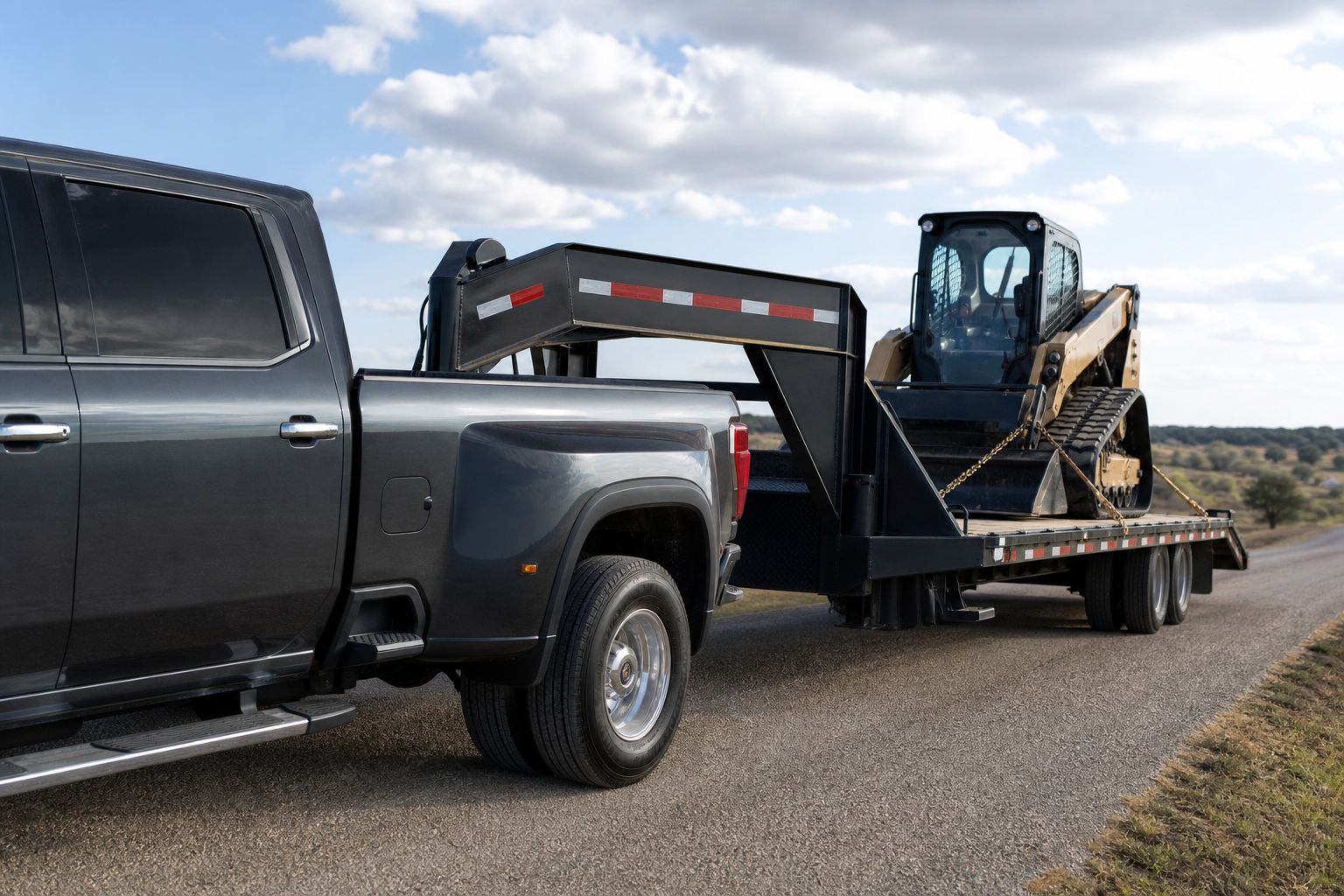
A gooseneck hitch mounts a ball directly over (or just ahead of) the rear axle, typically through the bed floor. Because the pivot point sits over the axle instead of behind it, gooseneck setups distribute weight more evenly and tow noticeably more stable at highway speeds, especially with heavier loads. Gooseneck ratings commonly run from 20,000 lbs up to 30,000+ lbs on heavy-duty trucks, which is why they’re the standard choice for large livestock trailers, equipment trailers, and flatbed gooseneck trailers used in ranching, construction, and oilfield work across Texas and Louisiana. The catch is that a gooseneck ball requires either a dedicated flatbed with a built-in gooseneck coupler or a puck-system/under-bed gooseneck hitch installed into your existing bed.
Key Differences at a Glance
- Towing capacity: Bumper pull tops out lower (roughly 17,000 lbs max); gooseneck routinely handles 20,000–30,000+ lbs.
- Stability: Gooseneck’s over-axle pivot point tracks straighter and sways less than a bumper pull, particularly in crosswinds common along the Gulf Coast.
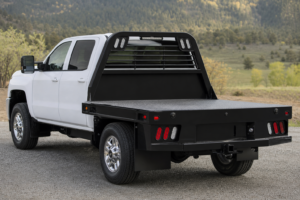
- Bed compatibility: Bumper pull works with any bed as-is; gooseneck usually requires a flatbed with an integrated coupler or a hole cut for a puck-system hitch.
- Turning radius: Gooseneck trailers turn tighter than bumper pull trailers of comparable length, which matters in tight job sites or ranch gates.
- Cost: Bumper pull setups are generally cheaper to add; gooseneck installs cost more but pay off in capacity and safety margin for heavy loads.
Which One Should You Choose?
If you’re towing light equipment trailers, small livestock trailers, or utility trailers under roughly 10,000 lbs, a bumper pull setup is simpler and cheaper, and it won’t interfere with a service body or toolbox-equipped bed. If you’re regularly hauling heavy equipment, large gooseneck stock trailers, or anything pushing 15,000+ lbs, a flatbed with a gooseneck coupler is the safer, more stable choice — and it’s what most of our commercial and ranch customers spec when we build a new flatbed from the ground up.
Get the Right Setup at Star Truck Equipment
Star Truck Equipment builds and installs both bumper pull-compatible bodies and flatbeds with integrated gooseneck couplers for customers across Texas and Louisiana. Our team can walk you through the towing math for your specific truck and trailer combination before you buy.
Call Star Truck Equipment at (979) 532-1486 or visit us at 2507 County Rd 231, Wharton, TX 77488 to talk through the right hitch and bed setup for your towing needs.