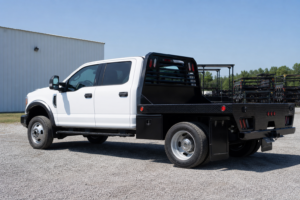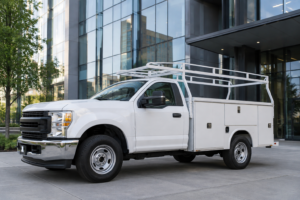
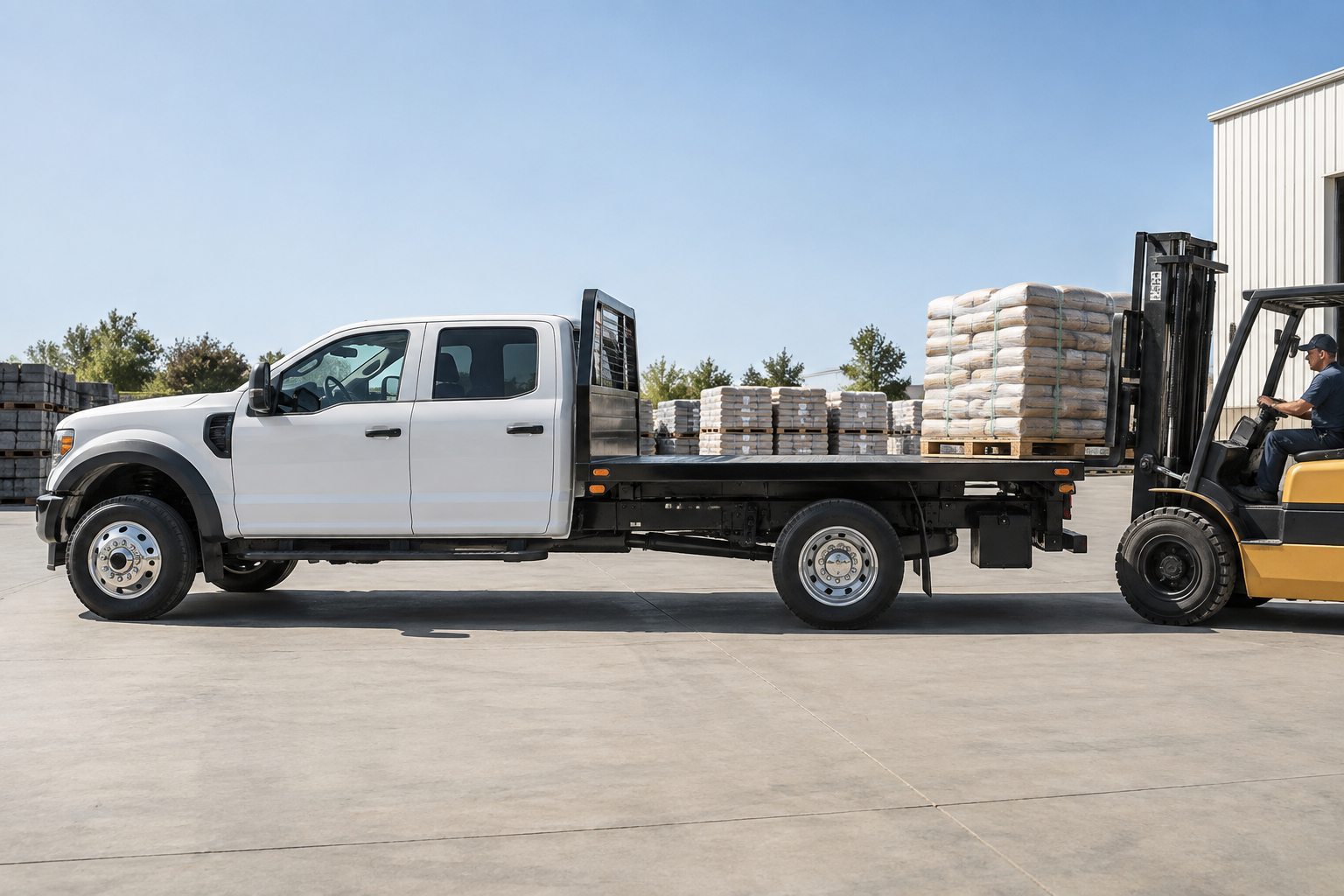
Buyers often assume a one-ton chassis carries a one-ton load. Once a body, toolboxes and equipment go on, the real number is smaller. Here is the simple math we walk customers through before an upfit.
The Basic Formula
Payload = GVWR – (curb weight of the chassis + body + add-ons + passengers and fuel)
- GVWR: gross vehicle weight rating, printed on the door-jamb label. It is the most the truck may weigh fully loaded.
- Curb weight: the cab-and-chassis as delivered, with fluids.
- Body weight: steel decks and service bodies weigh meaningfully more than aluminum; ask for the actual spec-sheet weight of the exact model and length.
- Add-ons: headache racks, toolboxes, cranes, compressors, hitches, liftgates and tie-down hardware all count.
Where Buyers Get Surprised
- Forgetting the crew: three people and a full fuel tank can take several hundred pounds.
- Stacking accessories without adding them up.
- Ignoring axle ratings. Even if total weight is fine, the rear GAWR can be the limit when load sits far behind the axle.
- Tongue weight from a gooseneck or bumper-pull hitch counts against payload.
Ways to Gain Payload
- Choose an aluminum or lighter-duty body when your loads are light and bulky.
- Step up to a dually or a higher-GVWR chassis for heavy, steady loads.
- Trim features you will not use.
Every truck is different, so confirm numbers for your exact chassis. See our flatbed truck bodies, service bodies and truck accessories, or read 12-foot vs 16-foot platform body on a dually.
Talk to Star Truck Equipment in Wharton, TX
We help customers across Texas and Louisiana match the body to the chassis and the job. Call (979) 532-1486 and we will run the numbers with you.