Dump Flatbed vs Standard Flatbed: Which One Fits Your Work?
Choosing between a dump flatbed and a standard flatbed is one of the most common decisions truck buyers face when upfitting a work truck. Both styles are versatile haulers, but they’re built for different jobs. Here’s how they compare so you can decide which is the right investment for your business — whether you’re hauling gravel in Wharton, TX or working a job site anywhere across Texas and Louisiana.
Standard Flatbeds: Simple, Versatile, Budget-Friendly
A standard flatbed is a flat, open deck with no moving parts — just a solid steel or aluminum platform, headache rack, and tie-down rails. It’s the most affordable option and the easiest to maintain since there’s no hydraulic system to service. Standard flatbeds excel at hauling equipment, pipe, lumber, fencing materials, and anything you can load with a forklift or by hand. They’re the go-to choice for ranchers, contractors, and oilfield crews who need a dependable, no-frills hauler.
Dump Flatbeds: Flatbed Versatility Plus Hydraulic Dumping
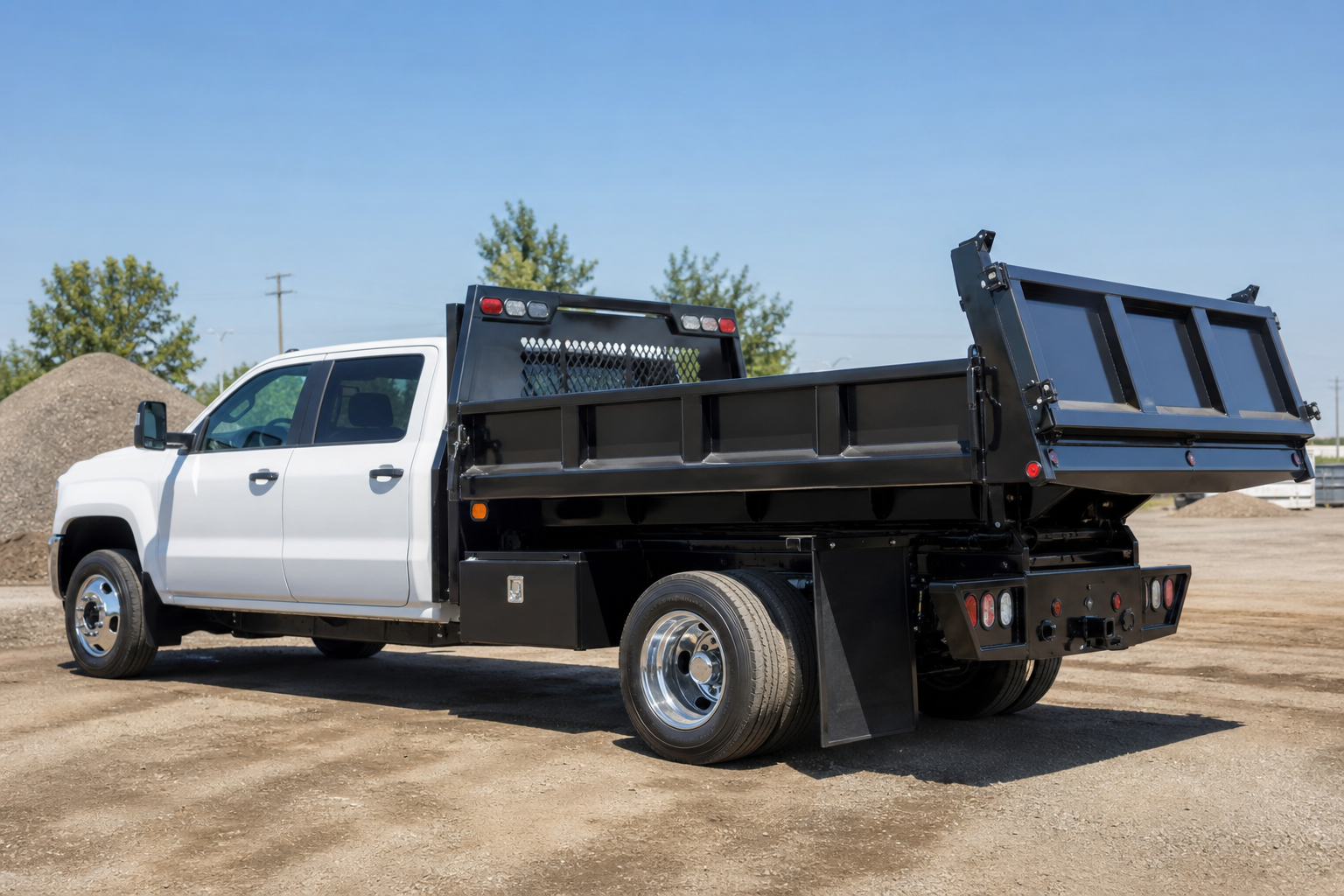
A dump flatbed combines the open deck of a standard flatbed with a hydraulic lift system and rear or side-dump gate, letting you haul loose materials like gravel, sand, dirt, and debris — then dump the load without shoveling it out by hand. This makes dump flatbeds a strong choice for landscaping crews, demolition and cleanup contractors, and anyone regularly moving bulk material. The tradeoff is a higher upfront cost and periodic maintenance on the hydraulic pump, cylinders, and hoses.
Key Differences to Consider
- Cost: Standard flatbeds are less expensive upfront and cheaper to maintain long-term since there’s no hydraulic system.
- Hauling loose material: Dump flatbeds win here — no shoveling, no manual unloading, and faster turnaround on job sites.
- Weight capacity: Standard flatbeds are often slightly lighter, which can translate to a bit more usable payload for equipment hauling.
- Maintenance: Standard flatbeds have virtually nothing to service. Dump flatbeds require occasional hydraulic fluid checks and hose inspections.
- Use case fit: If you haul equipment, pipe, or palletized materials, go standard. If you move gravel, sand, mulch, or debris regularly, the dump flatbed pays for itself in saved labor.
Which Flatbed Is Right for You?
Think about what you haul most often. Contractors and ranchers who mostly move equipment and materials that get loaded and unloaded by hand or forklift usually do best with a standard flatbed. Landscapers, excavation crews, and anyone hauling loose bulk material on a regular basis will get a fast return on investment from a dump flatbed. Many of our customers across Texas and Louisiana end up choosing based on how much time they’ll save not shoveling out truckloads by hand.
See Both Styles at Star Truck Equipment
Star Truck Equipment stocks and builds both standard and dump flatbeds in a range of sizes and configurations, from steel to aluminum, for Ford, Ram, and Chevy chassis. Our team can help you figure out which style fits your daily workload and budget.
Call Star Truck Equipment at (979) 532-1486 or visit us at 2507 County Rd 231, Wharton, TX 77488 to compare dump and standard flatbeds in person.