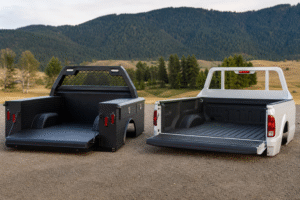
Ford F-350 vs. Ram 3500 Flatbed Fitment: What Buyers Need to Know
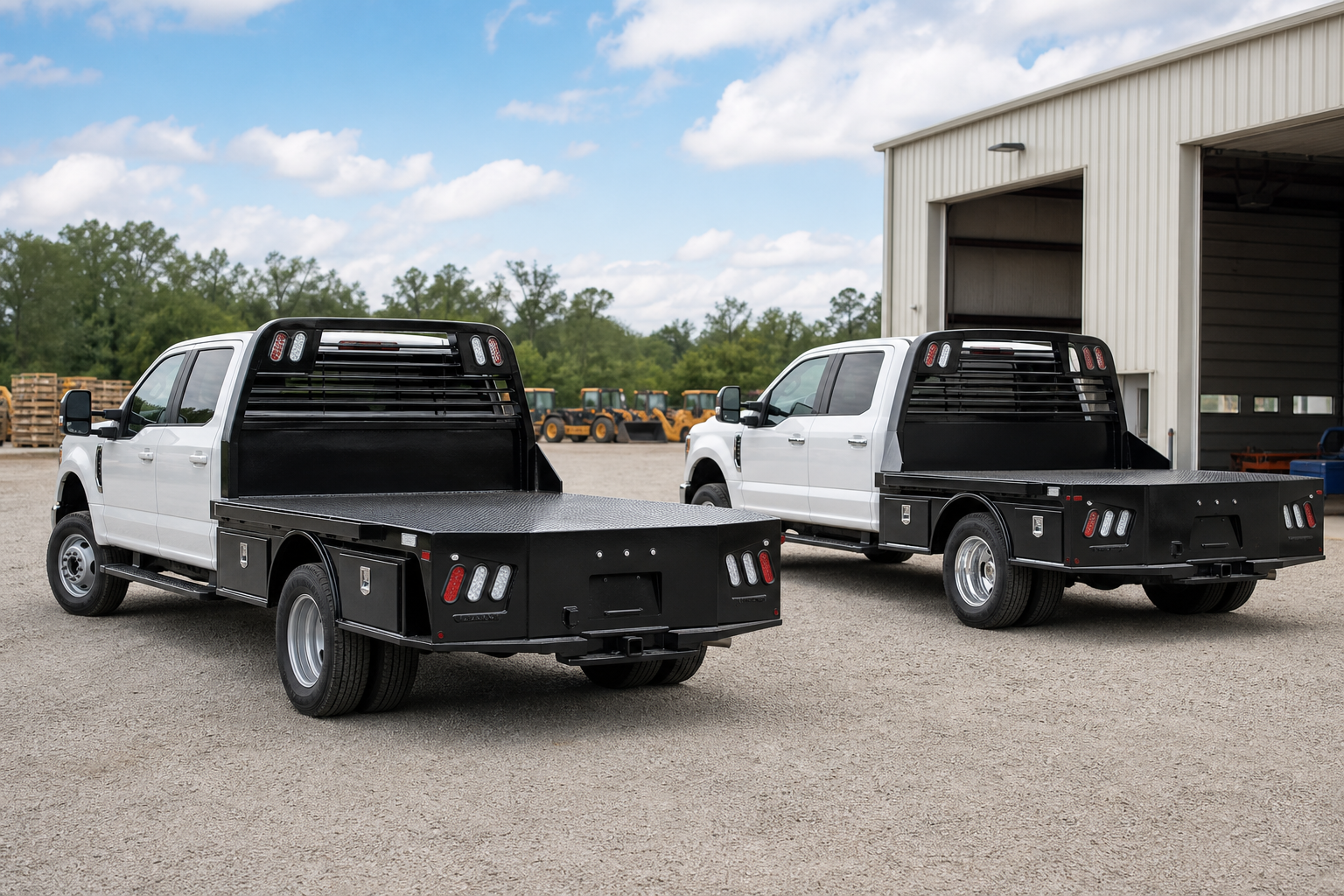
The Ford F-350 and Ram 3500 are two of the most popular cab-and-chassis trucks we build flatbeds for at Star Truck Equipment, and while both platforms take a flatbed conversion well, they don’t fit identically off the shelf. If you’re cross-shopping these two trucks for a work-truck build, here’s what actually changes at the flatbed mounting stage.
Cab-to-Axle Measurement Differences
Both the F-350 and Ram 3500 are offered in a range of cab-to-axle (CA) configurations — typically 60″, 84″, and 60″ CA long-bed options depending on cab style and wheelbase. The key is that Ford and Ram don’t always spec their CA lengths identically across trim years, so a flatbed sized for a specific Ford CA won’t necessarily bolt straight onto a Ram chassis with a similar-sounding wheelbase. We always confirm the exact CA measurement on the individual truck rather than assuming based on advertised wheelbase alone — this is the single most common fitment mistake buyers make when ordering a bed themselves.
Frame Width and Mounting Hardware
Frame rail width and hole spacing differ enough between Ford Super Duty and Ram HD chassis that flatbed manufacturers like CM, Norstar, Bedrock, and Pronghorn build brand-specific mounting kits rather than a universal bracket. Using the correct kit for the chassis keeps the deck sitting level and prevents stress cracking at the mounting points down the road. This is one of the reasons DIY flatbed swaps sometimes end up with a bed that sits slightly crooked or squeaks under load — the mounting hardware wasn’t matched to the frame.
Wiring and Lighting Hookups
Ford and Ram route their factory chassis wiring differently at the rear of the cab, which affects how a flatbed’s tail lights, back-up lights, and trailer wiring harness get tied in. A shop experienced with both platforms knows where to tap in cleanly on each truck so you keep full factory functionality — trailer brake controller, back-up camera, and all — instead of splicing into the wrong circuit and chasing electrical gremlins later.
Dual Rear Wheel vs. Single Rear Wheel Fitment
Both trucks are available in SRW and DRW configurations, and flatbed width and skirting kits need to match. A DRW-specific flatbed won’t sit right on an SRW chassis and vice versa — fender flares, tire clearance, and overall deck width are all tied to which rear axle configuration you’re running. If you’re not sure which flatbed spec matches your truck’s rear axle, that’s worth confirming before you order anything.
Which Truck Wins for Flatbed Work?
Honestly, both the F-350 and Ram 3500 make excellent flatbed platforms, and neither has a meaningful edge in how well a properly-sized flatbed fits. The real differentiator is payload rating and towing capacity for your specific work, not fitment ease. What matters most is having a shop measure your actual truck — CA, frame width, and axle configuration — rather than ordering a flatbed based on the model name alone.
Get It Fitted Right the First Time
Star Truck Equipment installs flatbeds on both Ford F-350 and Ram 3500 chassis every week for customers across Texas and Louisiana. We measure your specific truck, match the correct mounting kit and wiring harness for your platform, and get the bed sitting level and legal the first time — no guesswork.
Call Star Truck Equipment at (979) 532-1486 or visit us at 2507 County Rd 231, Wharton, TX 77488 to get your F-350 or Ram 3500 measured and quoted for a flatbed.