Standard Gooseneck Ball vs. B&W Turnoverball: Which Hitch Setup Is Right for Your Truck Bed?
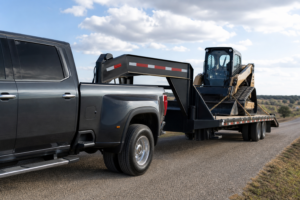
If you’re speccing a new flatbed or truck bed for gooseneck towing, one decision that gets overlooked until install day is which type of gooseneck ball setup to run: a standard fixed ball, or a flip-over system like the B&W Turnoverball. Both get the job done, but they solve different problems depending on how often you tow, what you haul when you’re not towing, and how your flatbed body is laid out. Here’s how they compare for Texas and Louisiana truck buyers building out a gooseneck-ready work truck.
Standard Fixed Gooseneck Ball: Simple and Always Ready
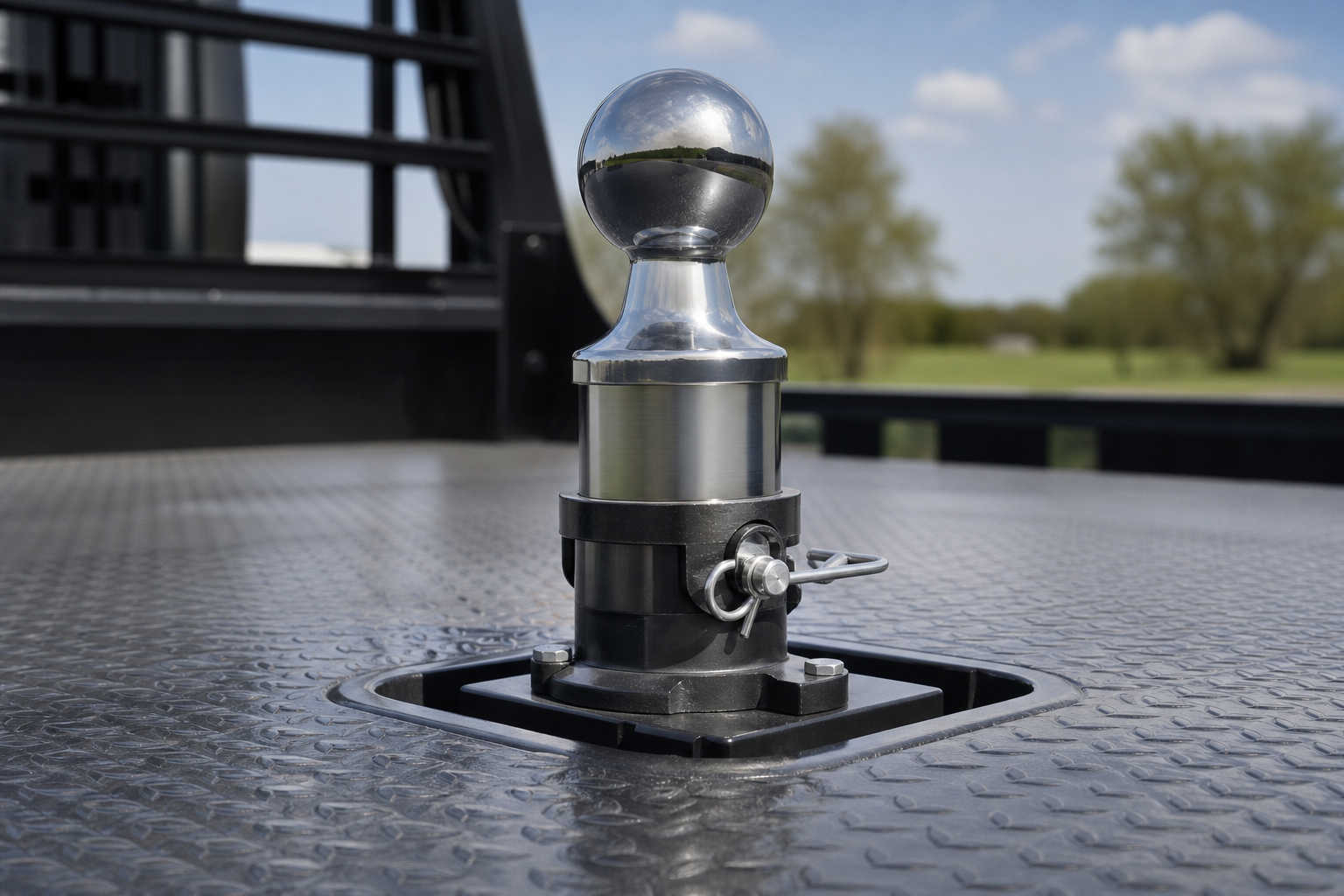
A standard gooseneck ball mounts permanently in the bed, usually through a hole in the deck near the rear axle, and stays in the towing position all the time. There’s nothing to flip, latch, or adjust — back up to the trailer, drop the coupler, and hook up. It’s the simplest, most affordable option, and it’s the setup most trailer haulers are used to. The tradeoff is that the ball sits proud of the deck surface at all times, which can get in the way if you’re hauling pallets, equipment, or cargo that needs a flat, obstruction-free deck when you’re not towing a gooseneck trailer.
B&W Turnoverball: Flat Deck When You Need It
The B&W Turnoverball system uses a ball mounted on a bracket that rotates 180 degrees — flip it up for towing, flip it back down and it tucks flush below the deck surface when you’re not hauling a gooseneck trailer. That flexibility matters for operators who split time between gooseneck towing and hauling flatbed cargo, tools, or equipment where a deck obstruction isn’t welcome. The Turnoverball system costs more up front than a fixed ball and adds one more moving part to maintain, but for a truck that earns its keep both ways, the flat-deck capability is worth the added cost for a lot of our customers.
Which Setup Fits Your Work?
- Dedicated gooseneck haulers: If the truck is towing a gooseneck trailer nearly every time it rolls, a standard fixed ball is simpler, cheaper, and just as reliable.
- Mixed-use flatbeds: If the same truck tows a gooseneck trailer some days and hauls pallets, equipment, or cargo flat on the deck other days, the Turnoverball’s flush-mount capability keeps the deck clear when you need it.
- Budget-conscious builds: A standard ball is the lower-cost option and has fewer parts to service over the life of the truck.
- Livestock and ag hauling: Ranchers running hay beds or stock trailers alongside gooseneck trailers often prefer the Turnoverball so the deck stays usable for both jobs.
- New flatbed installs: Either setup can be specced when you order a new flatbed conversion — worth deciding before the bed goes on, since retrofitting later means cutting into an already-mounted deck.
Specced Right the First Time
Star Truck Equipment builds and outfits flatbeds and service bodies across our brand lineup — Bedrock, CM, Norstar, Pronghorn, NXG, RKI, Bradford Built, and Aluma — with gooseneck hitch options matched to how you actually use the truck. Whether you need a standard fixed ball for dedicated trailer towing or a flip-over system for mixed hauling, we’ll spec the right setup before the bed goes on your truck in Wharton.
Talk to Star Truck Equipment
Not sure whether a standard gooseneck ball or a Turnoverball setup makes more sense for your flatbed? Our team in Wharton, TX helps fleets and independent haulers across Texas and Louisiana spec the right hitch, deck, and body configuration for how their trucks actually get used.
Call Star Truck Equipment at (979) 532-1486 or visit us at 2507 County Rd 231, Wharton, TX 77488 to talk through gooseneck hitch and flatbed configuration options for your truck.