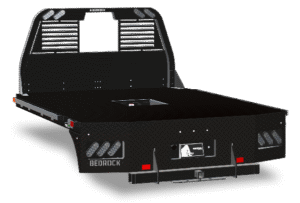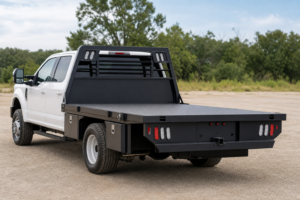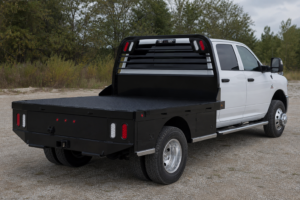
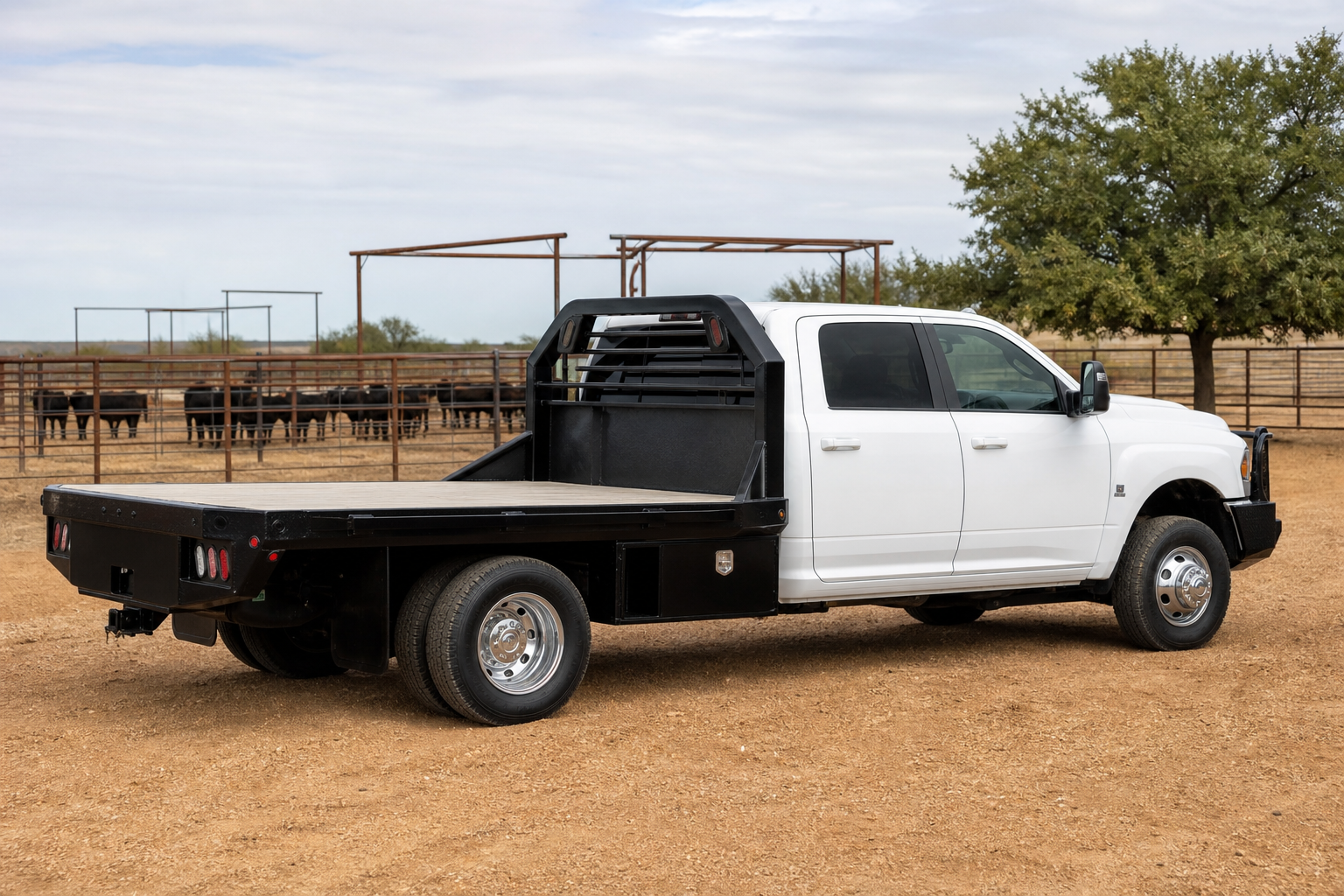
If you run cattle, haul hay, or move equipment across a Texas or Louisiana ranch every day, the flatbed you put on your truck matters almost as much as the truck itself. One of the most common questions we hear at our Wharton, TX shop is whether a rancher is better off with a gooseneck-style flatbed setup or a standard bumper pull configuration. The honest answer: it depends on how you tow, what you haul, and how your operation is set up day to day. Here’s how the two compare.
Gooseneck Flatbeds: Built for Heavy, Frequent Towing
A gooseneck flatbed body — like the ones we install from CM, Bedrock, and Norstar — includes a factory-integrated gooseneck hitch ball mounted directly in the bed. For ranchers who tow gooseneck stock trailers, hay trailers, or equipment trailers on a regular basis, this is the setup of choice for a few reasons:
- Weight distribution — The hitch sits over or ahead of the rear axle, putting tongue weight where the truck can handle it best, which matters when you’re pulling a loaded stock trailer full of cattle.
- Stability at speed — Gooseneck setups track straighter and sway less than bumper pull configurations, especially on the long, straight highways common across rural Texas and Louisiana.
- Higher towing capacity — Most gooseneck-equipped flatbeds can handle significantly more trailer weight than a comparable bumper pull hitch, which matters if you’re moving a loaded gooseneck livestock trailer or a skid steer on a trailer.
The tradeoff is that a gooseneck setup is a bigger commitment — you’re building your flatbed around that hitch, and if your operation doesn’t tow gooseneck trailers regularly, you may not need it.
Bumper Pull Flatbeds: Flexibility for Everyday Ranch Work
A bumper pull setup uses a standard receiver hitch mounted at the rear of the flatbed. This is the more flexible option for ranchers who split time between towing and general hauling:
- Easier hookups — Backing up to a bumper pull trailer is more forgiving than lining up a gooseneck ball, which matters if you’re hooking and unhooking multiple times a day moving hay or equipment between pastures.
- More versatile hauling — With no gooseneck hitch taking up bed space, a bumper pull flatbed gives you a completely open deck for hauling loose hay, fence posts, feed, or equipment.
- Lower upfront cost — Bumper pull hitch setups are typically less expensive to install than a full gooseneck package.
The downside is towing capacity and stability — for heavier gooseneck stock trailers or long hauls, a bumper pull setup isn’t going to give you the same confidence at highway speed.
So Which Should You Choose?
For most working ranches running cattle across Texas and Louisiana, the decision comes down to your primary trailer type. If you already own or plan to buy a gooseneck stock trailer or gooseneck hay trailer, get a flatbed with an integrated gooseneck hitch from the start — retrofitting later costs more than building it in. If your operation mostly hauls loose materials and only occasionally tows a bumper pull utility trailer, a standard flatbed with a receiver hitch will serve you well and keep your deck completely open.
Many ranchers also choose a hybrid approach — a flatbed with both a gooseneck ball and a rear receiver hitch, giving you the best of both worlds for hauling hay one day and towing a gooseneck stock trailer the next.
Talk to a Real Truck Body Expert
At Star Truck Equipment in Wharton, TX, we build and install flatbeds from CM, Bedrock Granite, Norstar, and other trusted brands, configured to your exact hauling and towing needs — whether that’s a full gooseneck package, a bumper pull setup, or a combination of both. We serve ranchers across Texas and Louisiana and can walk you through the right configuration for your operation.
Give us a call at (979) 532-1486 or visit our flatbed bodies page to see what’s in stock. You can also check out our guide on truck beds for ranching and hay hauling for more on building the right rig for ranch work.