
Service Body vs. Cargo Trailer: Which Setup Is Better for Service Calls?
If you run a mobile service crew — HVAC, plumbing, electrical, oilfield maintenance, or general repair — you’ve probably weighed the same decision every growing fleet faces: upfit a truck-mounted service body or tow a separate cargo trailer behind your existing pickup. Both approaches get tools and parts to the job site, but they work very differently once you’re actually on the road and on the clock. Here’s how they stack up.
Service Bodies: One Vehicle, Faster on the Job
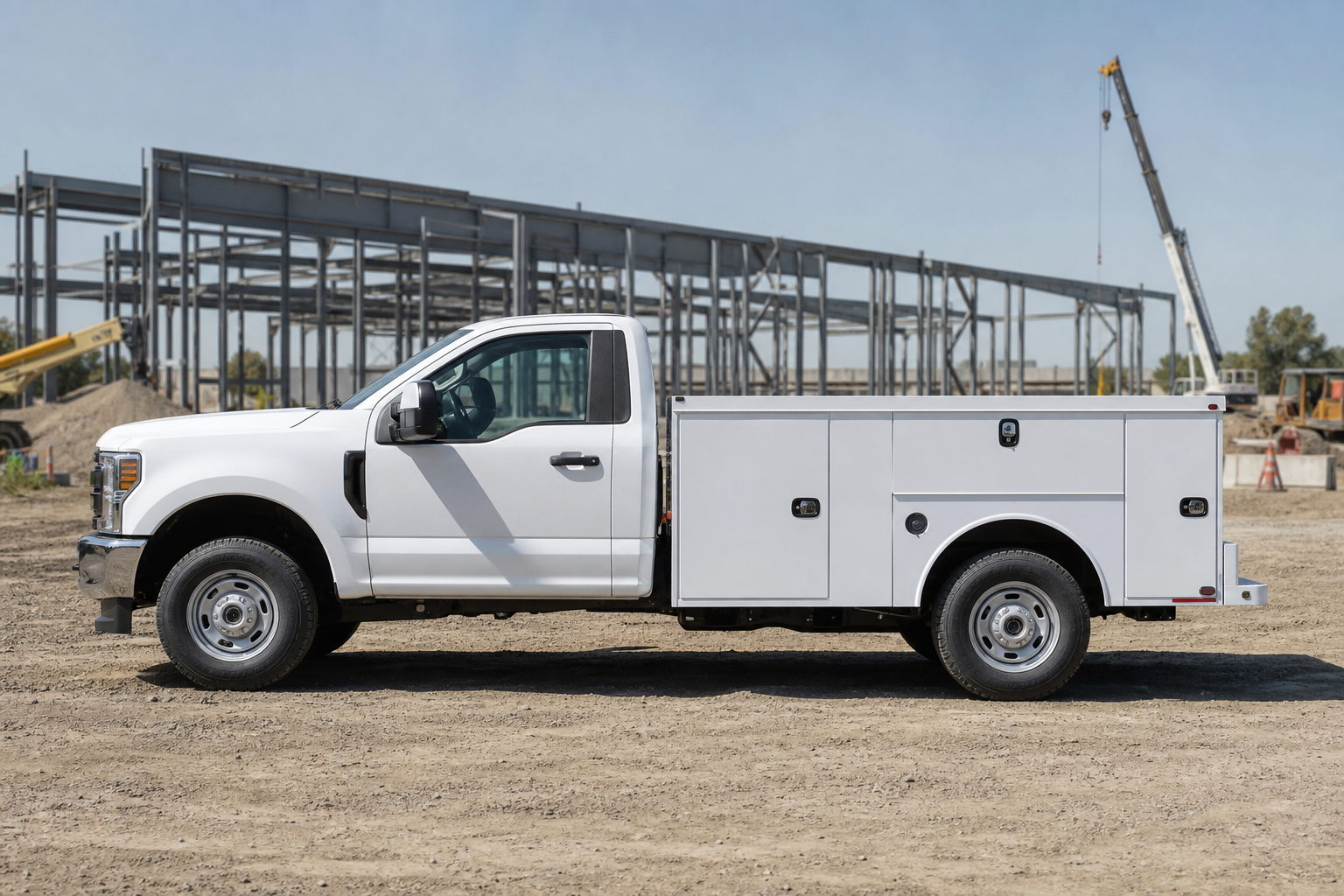
A mounted service body replaces your truck’s stock bed with a purpose-built structure of lockable compartments, drawers, and shelving organized for quick access. There’s no trailer to hook up, back into tight spaces, or store overnight — you drive to the job, open the doors, and get to work. For techs running multiple stops a day, that time savings adds up fast. Service bodies also keep your rig at a single, predictable length, which matters in residential driveways, parking garages, and crowded job sites where a trailer just won’t fit.
Cargo Trailers: More Volume, More Flexibility Between Trucks
A pull-behind cargo trailer offers a bigger enclosed box for bulky inventory, ladders, or larger equipment than most service bodies can hold, and it can be unhitched and swapped between trucks as your fleet changes. That flexibility is real, but it comes with tradeoffs: towing adds length and a blind spot, requires a hitch-rated tow vehicle, and means backing into tight lots or narrow streets on every stop. Trailers also need separate storage, registration, and maintenance (tires, bearings, brakes) on top of your truck’s own upkeep.
Key Factors in the Decision
- Job site access: If you’re regularly working residential neighborhoods, gated communities, or tight urban lots, a service body maneuvers where a trailer can’t.
- Stops per day: High-stop-count routes (HVAC, plumbing, electrical service calls) favor a service body — no hitching, unhitching, or trailer parking between jobs.
- Cargo volume: If you’re hauling large equipment, bulk materials, or need serious enclosed volume, a trailer may still win on raw capacity.
- Fleet flexibility: Trailers can move between trucks; a service body is permanently mounted to one chassis.
- Total cost of ownership: Factor in a second set of tires, brakes, and registration for a trailer versus the one-time upfit cost of a service body.
Built for Texas and Louisiana Service Fleets
Star Truck Equipment upfits STI service bodies and steel and aluminum service bodies on Ford, Ram, and Chevy chassis, built around how your crew actually works — compartment layout, drawer configuration, and crane options included. If your team is debating a mounted service body versus adding another trailer to the yard, we’ll walk through your route, stop count, and cargo needs and help you land on the setup that saves the most time on the road.
Talk to Star Truck Equipment
Not sure whether a service body or a cargo trailer makes more sense for your crew? Our team in Wharton, TX helps service fleets across Texas and Louisiana spec the right setup for their trucks and their work.
Call Star Truck Equipment at (979) 532-1486 or visit us at 2507 County Rd 231, Wharton, TX 77488 to discuss service body options for your service fleet.