1-Ton vs 2-Ton Service Crane: Which Capacity Do You Need?
When you’re spec’ing a new crane body for a service truck, one of the biggest decisions is lifting capacity. The two most common options for one-ton and heavier chassis are 1-ton and 2-ton service cranes. Both get the job done, but they’re built for different workloads, chassis weights, and budgets. Here’s how to decide which one is right for your fleet.
1-Ton Service Cranes: Lighter, More Maneuverable, Lower Cost
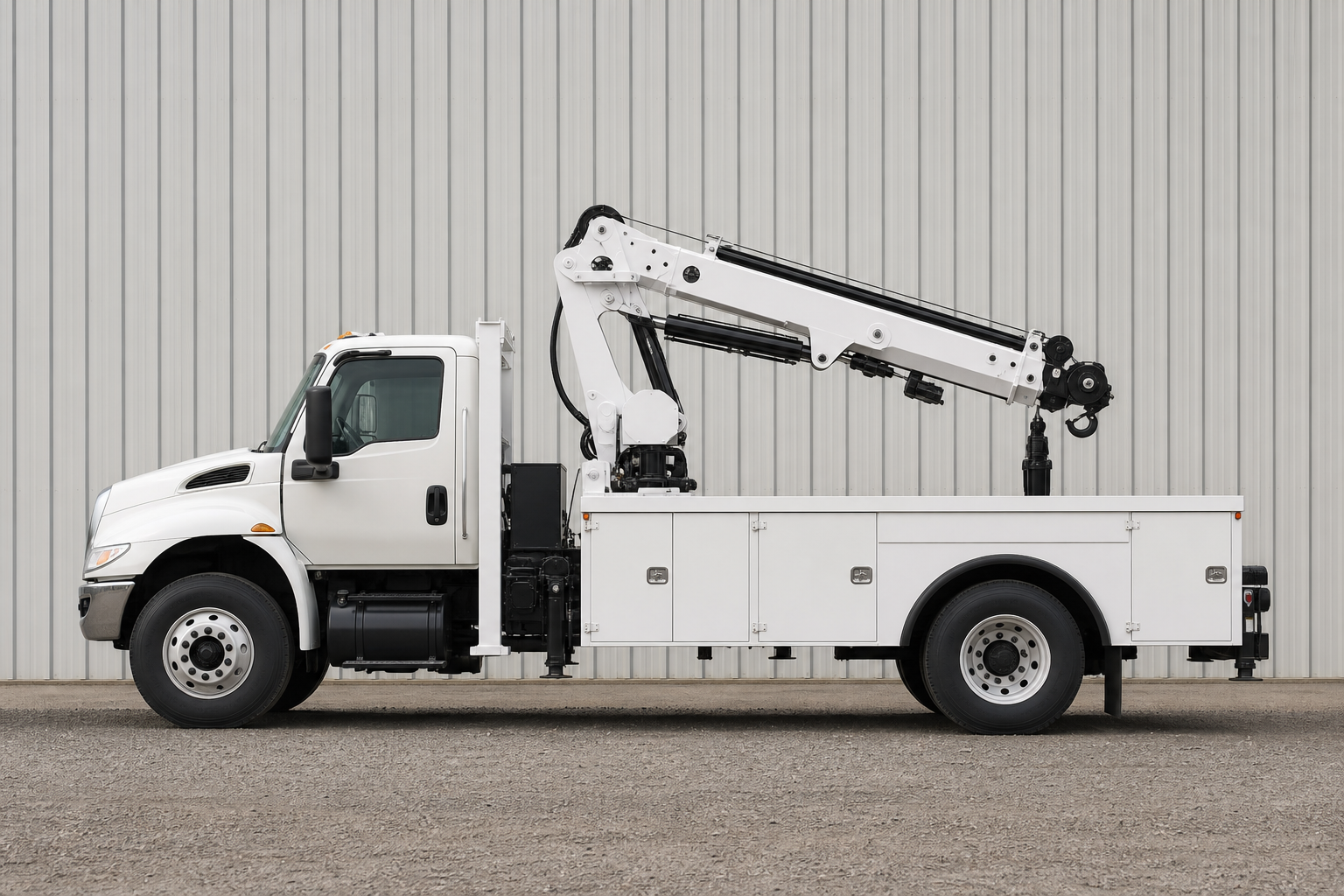
A 1-ton (2,000 lb) service crane is the standard choice for general mechanics trucks, utility service calls, and fleet maintenance work. It’s lighter, which means less impact on your truck’s payload and better fuel economy, and it typically costs less upfront. If you’re mostly lifting pumps, small compressors, transmissions, gearboxes, or general equipment components, a 1-ton crane has plenty of headroom without adding unnecessary weight to your STI service truck.
2-Ton Service Cranes: Built for Heavier, Bulkier Loads
A 2-ton (4,000 lb) crane is the right call when your crew regularly lifts heavy equipment, engines, hydraulic components, or oilfield gear that pushes past what a 1-ton unit can safely handle. Oilfield service trucks, industrial maintenance fleets, and heavy equipment technicians tend to gravitate toward the 2-ton option because it gives real working margin instead of maxing out the crane on every lift. The tradeoff is added weight on the chassis, so you’ll want to make sure your truck’s GVWR and rear axle rating can support both the heavier crane and a full load of tools and materials.
Key Factors in the Decision
- Typical lift weight: If your heaviest regular lifts stay under 1,500 lbs, a 1-ton crane has margin to spare. If you’re routinely near or over 2,000 lbs, size up to 2-ton.
- Chassis capacity: Heavier cranes eat into payload. Confirm your cab-chassis GVWR before committing to a 2-ton unit, especially on 3/4-ton and 1-ton pickups.
- Reach requirements: Capacity often trades off against boom reach — a 2-ton crane may have a shorter maximum reach at full extension than a comparable 1-ton unit.
- Budget and ROI: 2-ton cranes cost more to buy and maintain. If your work never approaches 1-ton limits, you’re paying for capacity you won’t use.
- Industry: Oilfield, industrial maintenance, and heavy construction crews lean 2-ton. General service, HVAC, and utility fleets are usually well served by 1-ton.
Tiger Cranes: Both Capacities Available
Star Truck Equipment builds and installs Tiger Cranes in both 1-ton and 2-ton configurations, matched to the right STI mechanics or service body for your chassis. Our team walks through your typical lift weights, chassis rating, and reach needs before recommending a capacity — so you’re not overpaying for crane you don’t need, or underspec’d for the loads you actually lift.
Get the Right Crane Capacity at Star Truck Equipment
Not sure whether your fleet needs a 1-ton or 2-ton service crane? Our team in Wharton, TX helps customers across Texas and Louisiana spec the right crane body for their trucks and their work every day.
Call Star Truck Equipment at (979) 532-1486 or visit us at 2507 County Rd 231, Wharton, TX 77488 to discuss 1-ton vs 2-ton service crane options for your truck.