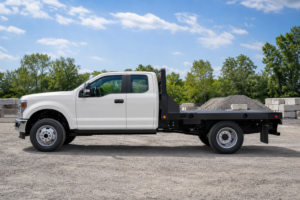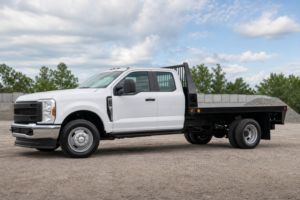
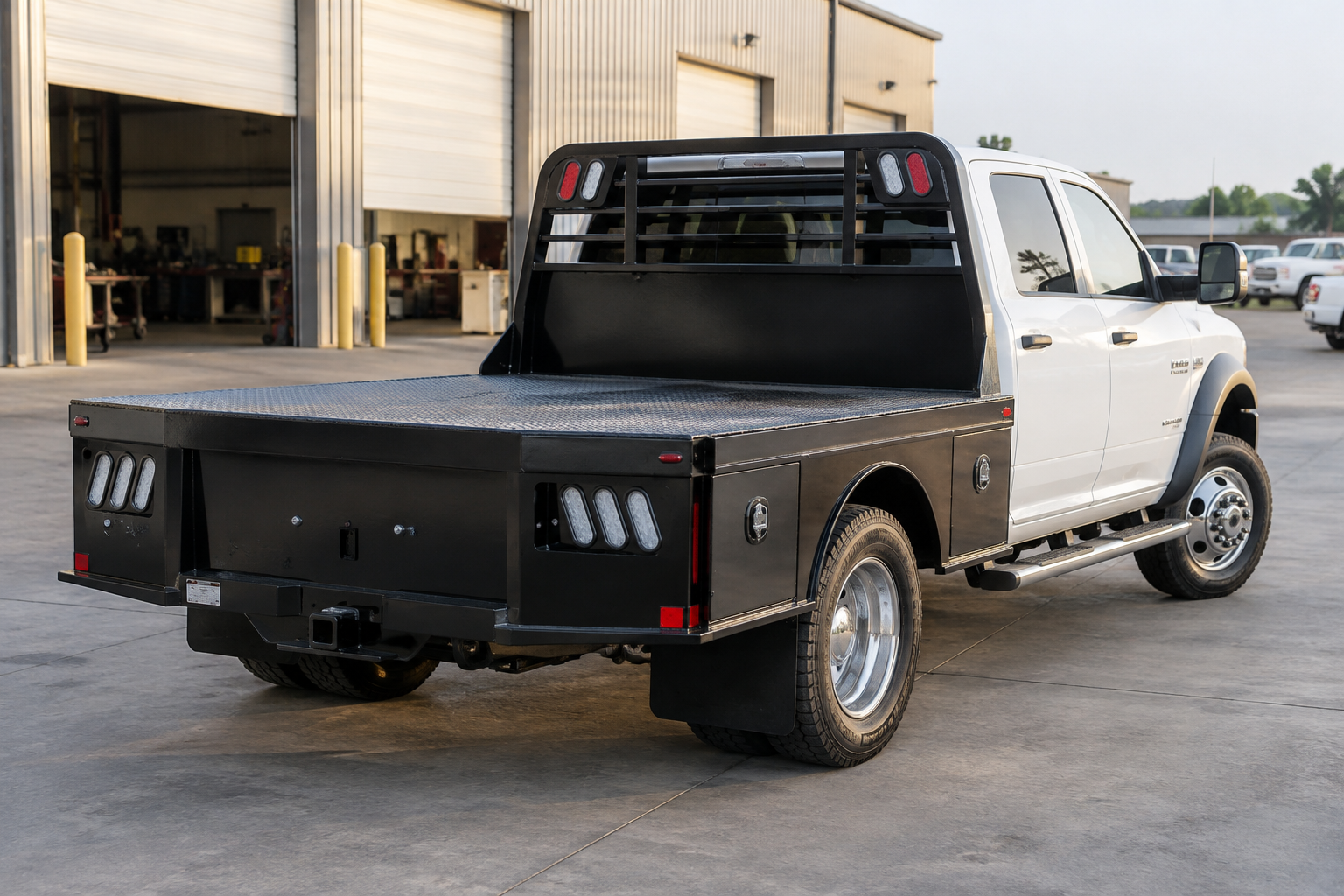
Swapping a factory pickup bed for a flatbed is one of the most common upfits we do at Star Truck Equipment in Wharton, TX. It turns a pickup into a real work truck, but a few details decide whether it goes smoothly.
1. Know Your Cab-to-Axle Measurement
Flatbed length depends on the distance from the back of the cab to the center of the rear axle. Measure it before you order. It determines whether a 9 ft, 11 ft or longer deck fits properly. See our flatbed truck bodies for available sizes.
2. Single or Dual Rear Wheels
SRW and DRW trucks need different deck widths and fender clearance. Tell us which you have so the deck is matched to your axle.
3. Wiring and Lights
The factory bed takes the tail lights, 7-pin plug and often the backup camera with it. A proper conversion reroutes the harness and installs new LED lighting, plus a hitch or gooseneck setup if you tow.
4. Fuel Filler and Exhaust
On some chassis the fuel filler neck and tailpipe sit close to the bed. Allow time for relocating or protecting them so the deck sits level and safe.
5. Payload and GVWR
A steel flatbed is often lighter than the stock bed once loaded with gear, but toolboxes, a headache rack and cargo all count against payload. Read our guide on calculating payload after an upfit.
6. Choose the Deck and Add-Ons
Browse Bedrock, CM and Norstar decks, then add a headache rack, stake pockets or toolboxes from our accessories.
Timeline
Most conversions are a one to two day job once the deck is in stock. We install for customers across Texas and Louisiana.
Ready to Convert?
Call Star Truck Equipment at (979) 532-1486 with your truck’s year, make, model and cab-to-axle, and we will confirm fit, price and availability.