Platform Body vs Flatbed: Which Work Truck Setup Wins?
If you’re replacing your factory pickup bed or speccing out a new chassis cab, two options come up constantly: the flatbed truck bed and the platform body. They look similar at first glance — both replace the factory bed with a flat hauling surface — but they’re built for different jobs and different industries. At Star Truck Equipment in Wharton, TX, we help contractors, ranchers, and fleet managers across Texas and Louisiana make this call every day. Here’s exactly how they differ and which one is right for your work truck.
What Is a Flatbed Truck Bed?
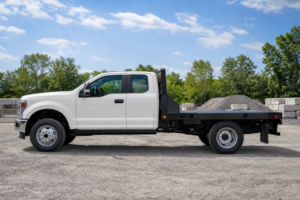
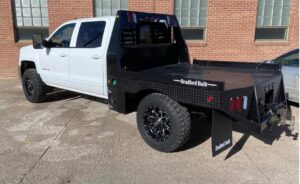
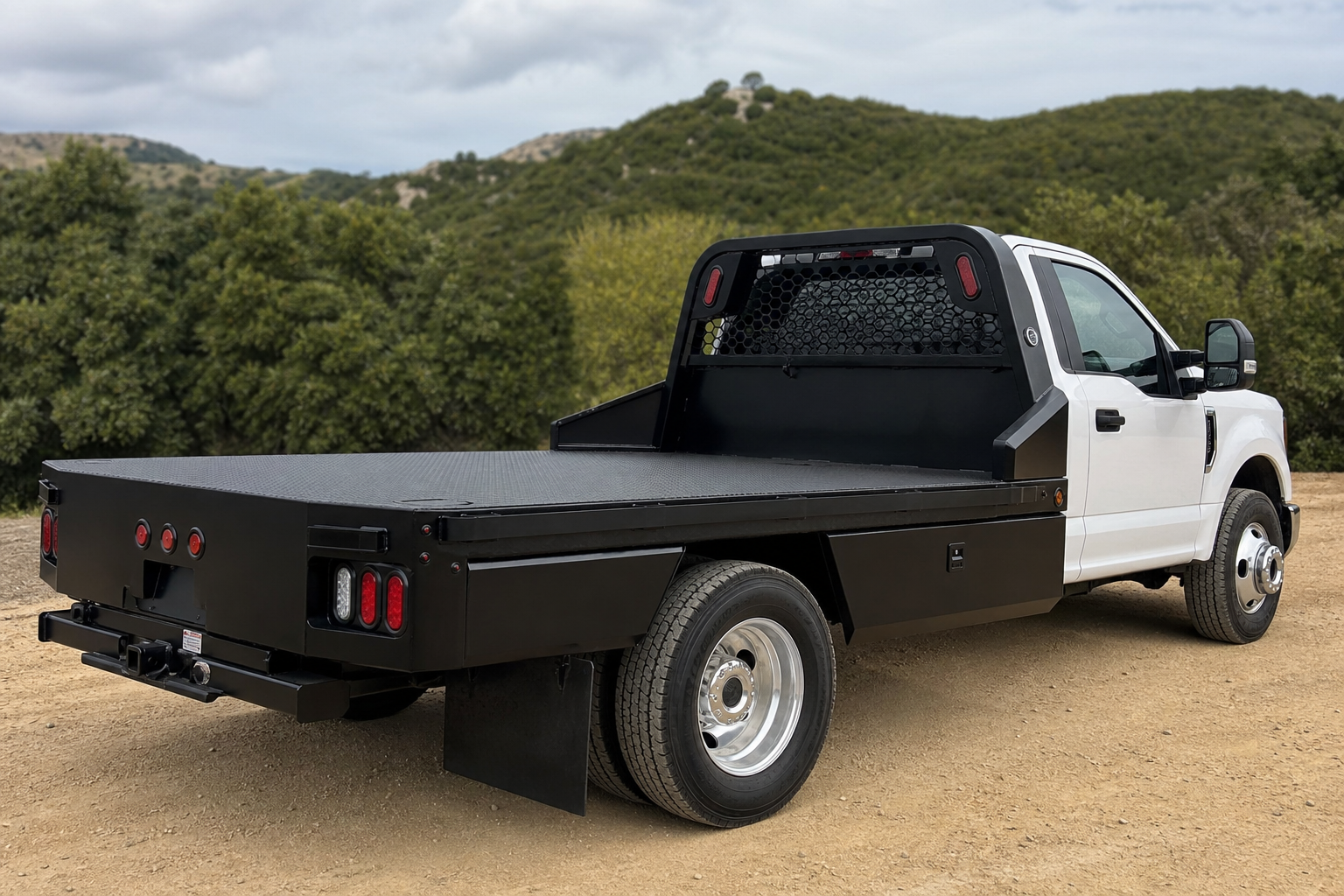
A flatbed truck bed is a steel (or aluminum) flat platform that mounts directly to your truck’s frame, replacing the factory bed. It’s designed for open hauling — no walls, no sides, no permanent structure above the deck. Flatbeds are the most versatile truck body type for hauling bulk materials, equipment, and loads that vary in size from job to job.
Popular flatbed brands at Star Truck Equipment include CM Truck Beds (RD, SK, Warrior series), Bedrock Granite 9G, Norstar SD/SM, Bradford Built, Pronghorn, and Aluma (aluminum). Most come in 7-ft to 11-ft lengths and mount on everything from a Ford F-250 SRW to a Ram 5500 chassis cab.
What Is a Platform Body?
A platform body — also called a stake body or rack body — is a flatbed with removable stake sides. The deck looks similar to a standard flatbed, but it has upright stake pockets along the perimeter that accept removable side panels or racks. This gives you the open-haul capability of a flatbed when sides are removed, plus the containment of a sided body when you need to haul loose materials that would shift or spill on an open deck.
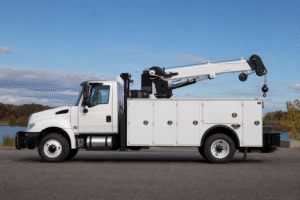
Platform bodies are common in our platform body inventory and are typically mounted on medium-duty chassis cabs (Ford F-450/F-550, Ram 4500/5500, or Chevy 4500HD/5500HD). They’re widely used in municipal fleets, landscaping companies, nursery operations, and any trade that hauls a variety of load types throughout the week.
Platform Body vs Flatbed: Side-by-Side Comparison
| Feature | Flatbed | Platform Body |
|---|---|---|
| Deck surface | Open, no sides | Open, with removable stake sides |
| Load containment | None (straps, chains, binders) | Stake sides contain loose loads |
| Best for | Equipment, pipe, lumber, bales, machinery | Loose materials, nursery stock, bulk cargo, mixed loads |
| Typical truck | F-250 to F-550, Ram 2500–5500 | F-450/F-550, Ram 4500/5500, medium duty |
| Weight | 500–900 lbs (steel), 300–550 lbs (aluminum) | 800–1,400 lbs (heavier due to stakes/hardware) |
| Versatility | High — works for almost any open haul | Very high — open or sided configurations |
| Common industries | Ranching, construction, oilfield, contractors | Landscaping, municipalities, nurseries, delivery |
| Typical price range | $2,500–$6,500 installed | $5,000–$10,000+ installed |
When to Choose a Flatbed
A flatbed is the right call if you:
- Haul equipment, machinery, or large items that need full deck access from all sides
- Run a ranch truck that hauls hay bales, livestock panels, or agricultural equipment (hay bed option is also worth considering)
- Work in construction, pipeline, or oilfield where loads vary in size and shape daily
- Need to mount a gooseneck hitch for towing — flatbeds are the standard platform
- Want the lowest price entry point for a truck body upgrade
- Plan to mount a headache rack, toolboxes, or crane (like a Tiger Crane) on the body
For most Texas ranch, oilfield, and construction operations, a flatbed body is the right starting point. The CM RD, Bedrock Granite 9G, and Norstar SD are our top-selling flatbeds for this reason — simple, tough, proven.
When to Choose a Platform Body
A platform body makes more sense if you:
- Haul loose materials that need containment — mulch, topsoil, nursery plants, landscaping materials, produce
- Run a landscaping company with crews that haul equipment AND loose materials on the same truck
- Work in municipal fleet operations where stake sides are needed for public works loads
- Need the option to configure the truck differently from week to week (sides in or sides out)
- Operate a delivery route where contained cargo is part of the job
Platform bodies are also common in Louisiana for agricultural delivery operations, nursery businesses, and parish maintenance fleets — where the ability to switch between open-haul and contained-haul configurations on a single truck saves money over owning two different vehicles.
What About Landscape Bodies?
If you’re a landscaper reading this, a third option is worth mentioning: the landscape body. This is a purpose-built truck body for landscaping operations — it typically includes a dovetail or ramp for moving equipment on and off, fixed sides, and often a toolbox or equipment compartment. It’s more specialized than either a flatbed or platform body, and may be the best fit if 90% of your work is landscaping versus general hauling.
Platform Body vs Flatbed: Key Decision Questions
Not sure which way to go? Ask yourself:
- Do I haul loose materials regularly? If yes, lean toward a platform body or at minimum a flatbed with stake pockets and removable sides.
- What’s my truck? If you’re on a 3/4-ton or 1-ton pickup (F-250, F-350, Ram 2500/3500), a flatbed is standard. Platform bodies typically sit on heavier chassis cabs (F-450+, Ram 4500+).
- Do I need a gooseneck or fifth-wheel hitch? Flatbeds are designed for hitch integration; platform bodies may complicate hitch positioning.
- What’s my budget? Flatbeds are more affordable upfront and have a larger selection at most dealers. Platform bodies are a bigger investment but add real versatility.
Talk to Star Truck Equipment — We’ll Help You Spec It Right
We outfit work trucks every day at 2507 County Rd 231, Wharton, TX 77488. Whether you’re a landscaper in the Houston area, a contractor in Beaumont, or a rancher in Victoria county, we’ll help you figure out whether a flatbed or platform body fits your actual workflow — not just what looks good on paper.
We carry CM, Bedrock, Norstar, Bradford Built, Pronghorn, Aluma, and more. Most installations take 1–2 business days once the body is on hand.
Call us at (979) 532-1486 to discuss your build, or browse our platform bodies and flatbed bodies online. Serving customers across Texas and Louisiana — from Houston and Victoria to Lake Charles and Baton Rouge.