Small contractors — electricians, plumbers, HVAC techs, and handymen — usually reach one of two conclusions
when it’s time to organize tools and equipment: mount a service body on the truck, or tow a utility trailer
behind it. Both solve the same core problem, but they solve it very differently. At
Star Truck Equipment in Wharton, TX, we build
service bodies for contractors across
Texas and Louisiana every week, and we get this question constantly — here’s how the two options actually
compare.
Service Body: Built-In, Always Ready
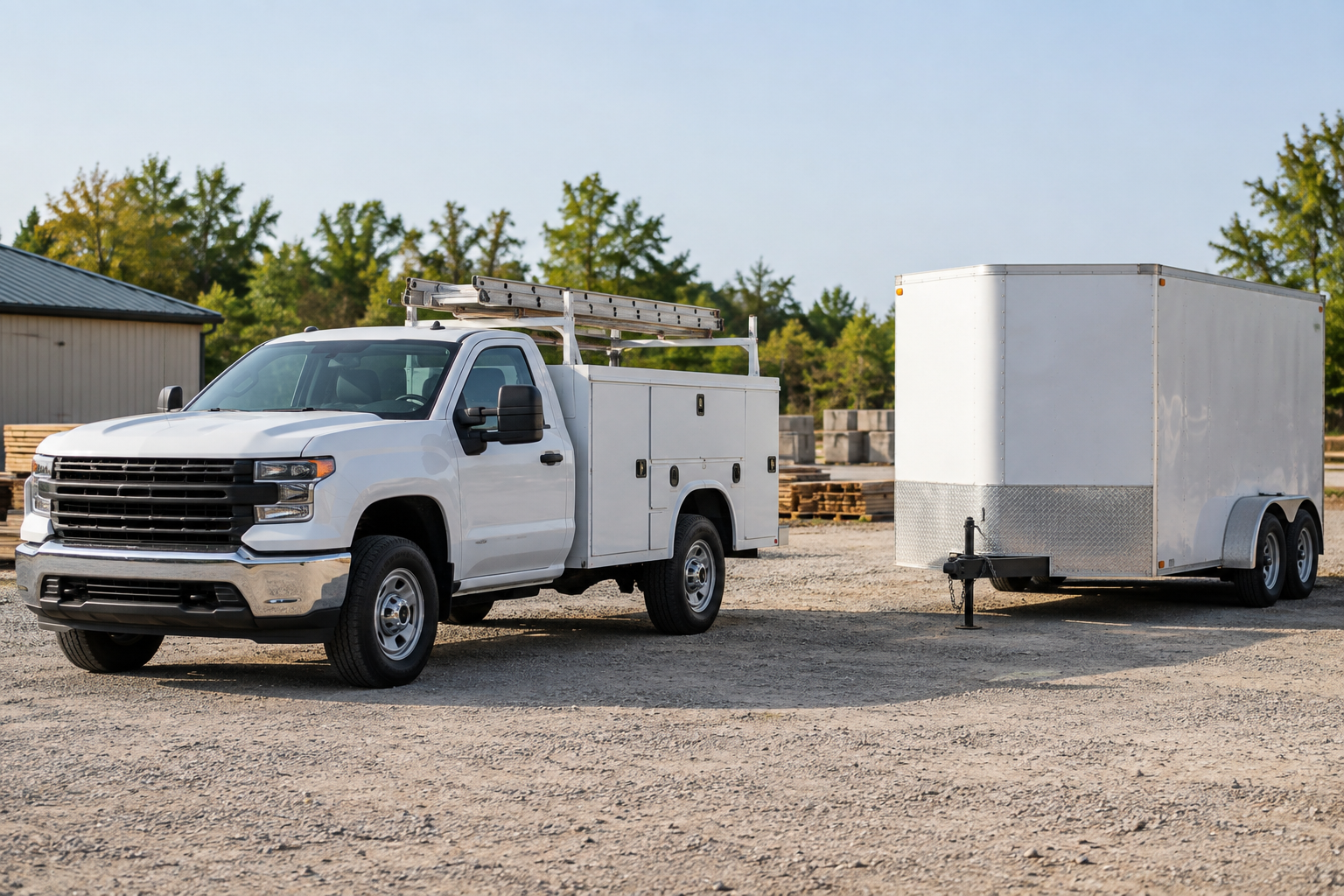
A service body replaces your truck bed with a steel or aluminum structure full of lockable compartments,
shelving, and drawer storage. Everything rides with the truck — no hitching up, no backing a trailer into a
tight driveway, no separate DOT trailer registration or lights to maintain. Tools stay organized in the same
compartments every day, which saves real time on multi-stop service routes. Compartments lock individually,
so a technician can leave the truck unattended at a job site with less risk of tools walking off. The tradeoff
is capacity — a service body has a fixed footprint, and bulky materials or equipment that won’t fit in a
compartment still need another way to travel.
Utility Trailer: More Capacity, More to Manage
A utility trailer — enclosed or open — can carry more volume than a service body, especially useful for
crews hauling ladders, pipe, lumber, or larger equipment alongside hand tools. It can also be dropped at a job
site and left there while the truck runs other errands, which some multi-crew operations use to their
advantage. But a trailer means towing capacity requirements on the tow vehicle, a hitch and trailer brake setup,
more maneuvering in tight residential streets and parking lots, and a second title/registration to keep current.
Security is also a bigger concern — a trailer left unattended overnight is an easier target than a locked
compartment on a truck that’s driven home.
Which Fits a Small Contracting Business?
- Solo operators and small crews doing multiple stops a day — a service body’s built-in organization wins on efficiency
- Crews hauling bulky materials or larger equipment — a utility trailer’s extra volume is hard to beat
- Tight residential job sites and street parking — a service body skips the backing-and-hitching hassle entirely
- Overnight security at unsecured lots — a locked service body compartment is safer than a parked trailer
- Growing operations — many contractors run both: a service body for daily tools and a trailer for occasional bulk hauls
There’s no universally right answer — it comes down to what you haul daily versus occasionally. Browse our
service bodies for sale, including
CM and
RKI models, or check our
truck accessories to outfit whichever setup
you choose.
Get Set Up Right the First Time
Star Truck Equipment builds and outfits work trucks for contractors and fleets across Texas and Louisiana
from our shop in Wharton, TX. Call us at (979) 532-1486 or browse our
service bodies and
truck accessories to find the right fit for
your business.