One of the first specs to nail down before a service body
or flatbed ever goes on the chassis is whether
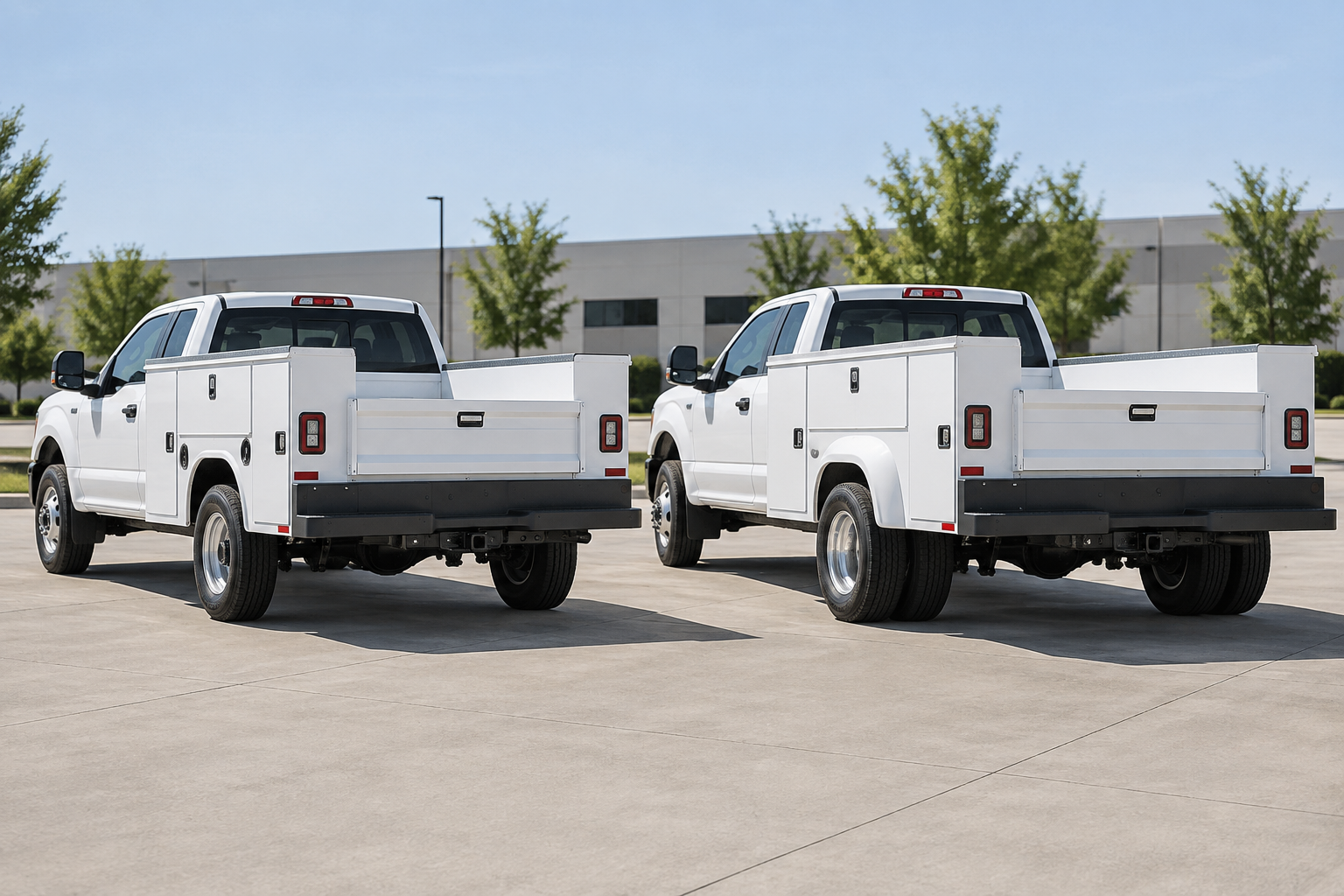
the truck rides on single rear wheels (SRW) or dual rear wheels (DRW). It’s a decision that gets made at the
dealership, before Star Truck Equipment ever touches the truck — but it drives payload capacity, stability, tire
cost, and how the finished work truck handles once a loaded body, tool storage, and a crane or lift gate are
added. We build service bodies, flatbeds, and crane bodies for both SRW and DRW chassis out of our shop in
Wharton, TX, serving fleets and owner-operators across Texas and Louisiana.
Single Rear Wheel (SRW)
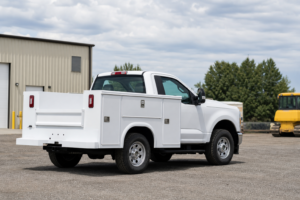
SRW trucks — one tire per side at the rear axle — are lighter, narrower, easier to park, and cost less to run
day to day: fewer tires to buy, rotate, and replace, and better fuel economy than an equivalent DRW truck. The
tradeoff is a lower rear axle weight rating, which caps how much payload you can carry once a steel service
body, ladder rack, compressor, welder, and a full day’s worth of tools and material are loaded in. For light
service work — HVAC, electrical, plumbing service calls, mobile mechanics — SRW is usually plenty of truck and
the lower operating cost adds up fast across a fleet.
Dual Rear Wheel (DRW)
DRW trucks add a second tire on each side of the rear axle, which spreads the load across more contact patch
and significantly raises the GVWR and payload rating. That extra capacity matters once you start adding a
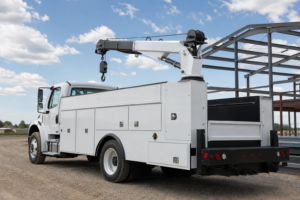
crane body, a full complement of steel toolboxes, a
welder and generator, or a hydraulic lift gate — all of which eat into payload fast. DRW trucks also tow more and
sit more stable under a heavy, top-loaded body. The tradeoffs: a wider rear track that can be harder to park and
maneuver on tight jobsites, four rear tires to maintain instead of two, and a rougher ride when the bed is empty.
Which One Should You Spec?
- Light service and trade work (HVAC, electrical, plumbing, mobile mechanic) — SRW is usually sufficient and saves on fuel and tires
- Crane bodies, heavy toolboxes, welders/compressors, or lift gates — DRW protects your payload margin and keeps you off the scale
- Oilfield, construction, and utility fleets hauling heavy equipment daily — DRW is the safer spec for GVWR compliance
- Tight urban routes or frequent tight-lot maneuvering — SRW’s narrower footprint is easier to live with
Before you order a body, always check the finished payload math — cab/chassis weight, added body weight, and
GVWR — against what the truck will actually carry loaded. We help buyers run that math on every
service body,
flatbed, and crane body build, whether the
chassis is SRW or DRW.
Get the Right Body for Your Chassis
Star Truck Equipment builds and installs truck bodies for SRW and DRW chassis for fleets and owner-operators
across Texas and Louisiana from our shop in Wharton, TX. Call us at (979) 532-1486 or browse our
service bodies and
truck accessories to get started.