If you’re running a contracting business in Texas or Louisiana, one of the biggest decisions you’ll make is how to outfit your work truck. Two of the most popular configurations — flatbed truck bodies and dump bodies — each solve a different problem. Choosing the wrong one can slow your crew down, limit your revenue, and leave money on the table.
At Star Truck Equipment in Wharton, TX, we’ve helped hundreds of contractors across South Texas and Louisiana find the right truck body for their work. Here’s a straight-talking breakdown of flatbeds vs. dump bodies so you can buy with confidence.
What Is a Flatbed Truck Body?
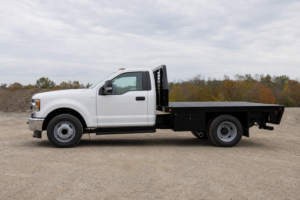
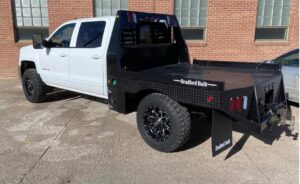
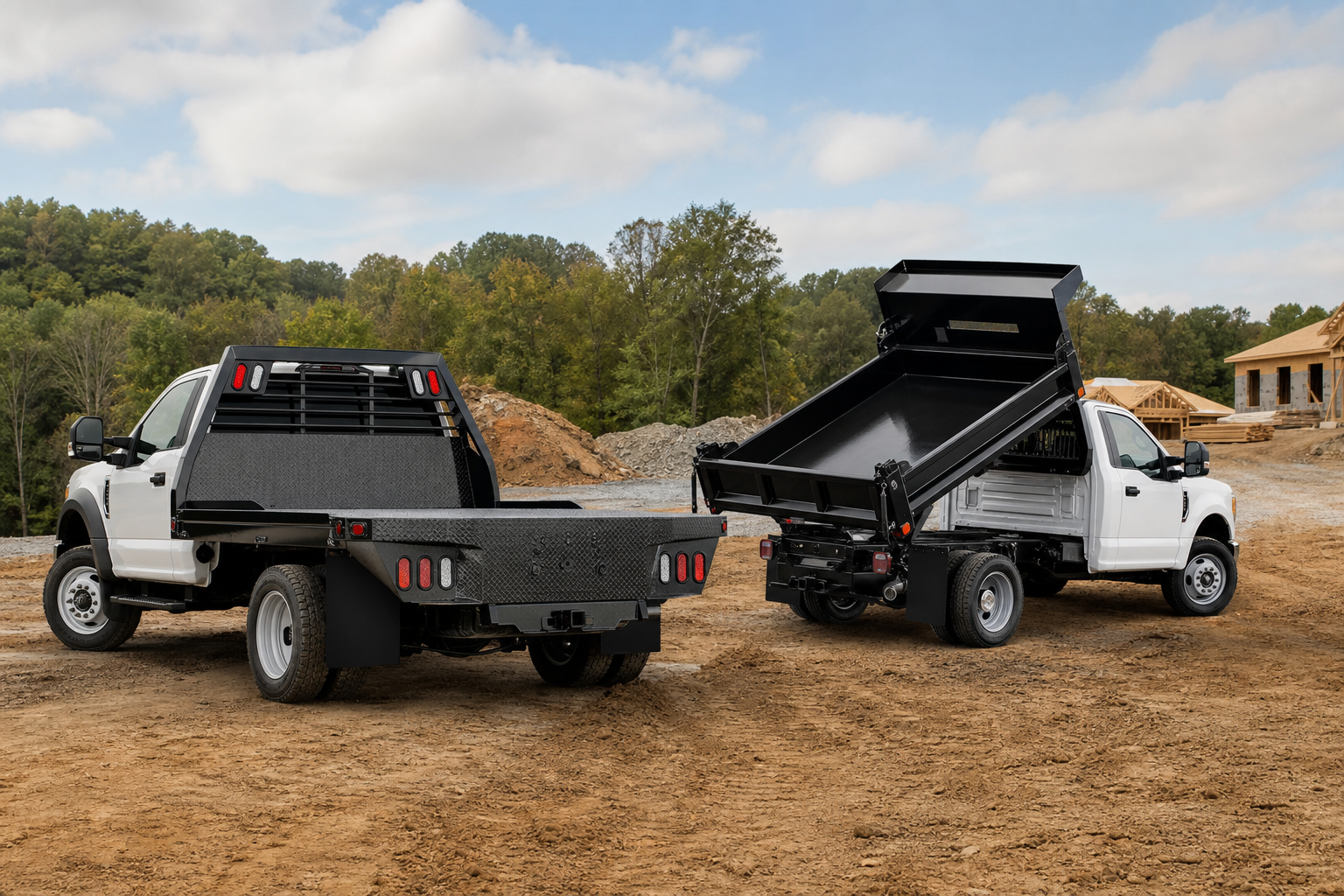
A flatbed body is an open, flat cargo platform that replaces your factory pickup bed. They’re built from steel or aluminum, typically 8 to 12 feet long, and available in configurations ranging from basic steel flats to skirted, gooseneck-ready, and dual-wheel models.
Top flatbed brands we carry:
- CM Truck Beds — The RD, TM, and ER are workhorses trusted by Texas contractors for decades
- Bedrock Truck Beds — The Diamond and Granite series offer premium steel construction with excellent value
- Norstar Truck Beds — Built tough for South Texas ranchers and contractors alike
- Bradford Built — American-made flatbeds with strong resale value
- Pronghorn — Great entry-level price point with solid construction
What Is a Dump Body?
A dump body — also called a dump bed or dump truck body — is a hydraulically operated cargo box mounted to a truck’s frame. You load material in, drive to the job site, and dump it with the push of a button. Dump bodies come in flatbed-style (dump flatbeds), contractor-style, and specialty configurations.
Unlike a standard flatbed, a dump body requires a hydraulic system connected to the truck’s PTO (power take-off) or an independent electric/hydraulic pump. Installation is more involved, and the price is higher — but for the right contractor, the productivity gain is enormous.
Flatbed vs. Dump Body: Head-to-Head Comparison
🔧 Versatility
Flatbed wins. Flatbeds haul almost anything — lumber, pipe, equipment, fencing materials, rebar, pallets, and more. They work with straps, chains, and boards. A dump body, by contrast, is optimized for loose material (gravel, dirt, sand, mulch, demolition debris) and isn’t ideal for equipment or odd-shaped loads.
💪 Productivity for Bulk Material
Dump body wins — and it’s not close. If your crew moves dirt, gravel, or debris daily, a dump body will save hours every week. Hand-unloading a yard of gravel from a flatbed is backbreaking. Dumping it takes 30 seconds.
💰 Cost
Flatbed wins. A quality steel flatbed for a 3/4-ton or 1-ton truck starts around $2,500–$4,500 installed. A contractor dump body on a chassis cab with hydraulics typically runs $6,000–$12,000+ depending on size and spec. The dump body investment pays off — but only if you actually haul loose material regularly.
🔨 Common Use Cases
| Use Case | Better Choice |
|---|---|
| Hauling lumber, fence posts, pipe | Flatbed |
| Moving gravel, dirt, fill material | Dump body |
| Carrying equipment and tools | Flatbed |
| Landscaping and mulch delivery | Dump body |
| Roofing tear-off debris | Dump body |
| Towing equipment trailers | Flatbed (gooseneck) |
| Fencing contractor | Flatbed |
| Concrete contractor (aggregates) | Dump body |
🛻 Weight & Payload
Flatbed wins for payload efficiency. A steel flatbed adds roughly 400–700 lbs to your truck. A dump body with hydraulics adds significantly more. If you’re already near your GVWR with a 3/4-ton or 1-ton, a flatbed stretches payload further.
Which Contractors Should Choose a Flatbed?
- Fencing contractors — You’re hauling posts, wire, t-posts, and tools — a flatbed is the clear choice
- Electricians and plumbers — Long conduit, pipe, and equipment need an open, flat surface
- HVAC contractors — Units, ductwork, and equipment are best strapped down on a flat
- Welding contractors — A skirted flatbed with toolboxes is the classic welder’s truck
- Ranchers — Hay, fence supplies, and equipment demand a flatbed
- General contractors — If you’re hauling a variety of materials, a flatbed keeps you flexible
Which Contractors Should Choose a Dump Body?
- Excavation and grading contractors — Moving dirt and rock is your bread and butter
- Landscaping companies — Mulch, topsoil, and plants move faster when you can dump
- Roofing contractors — Tear-off debris is heavy and miserable to unload by hand
- Concrete contractors — Sand, gravel, and demolition debris all go in the dump
- Demolition crews — Job-site cleanup becomes dramatically faster
Can You Get Both? Consider a Dump Flatbed
Some contractors split the difference with a dump flatbed — a flatbed body that incorporates a hydraulic dump mechanism. You get the open, versatile surface of a flatbed with the ability to raise the whole deck and dump loose material off the back. Brands like CM and Bedrock offer dump-capable configurations that serve contractors who need both functionality in one truck.
Talk to an Expert Before You Buy
Choosing between a flatbed and dump body depends on your trade, your truck’s GVWR, your typical job site, and your budget. We’ve helped contractors across Houston, Corpus Christi, San Antonio, Baton Rouge, and the surrounding region find the right setup — and we know how to match the right body to the right truck.
Call us at (979) 532-1486 or stop by Star Truck Equipment at 2507 County Rd 231 in Wharton, TX. We carry CM, Bedrock, Norstar, Bradford Built, Pronghorn, and more — and we install what we sell.
→ Browse our flatbed truck bodies
→ Browse our service bodies
→ See all truck bed brands